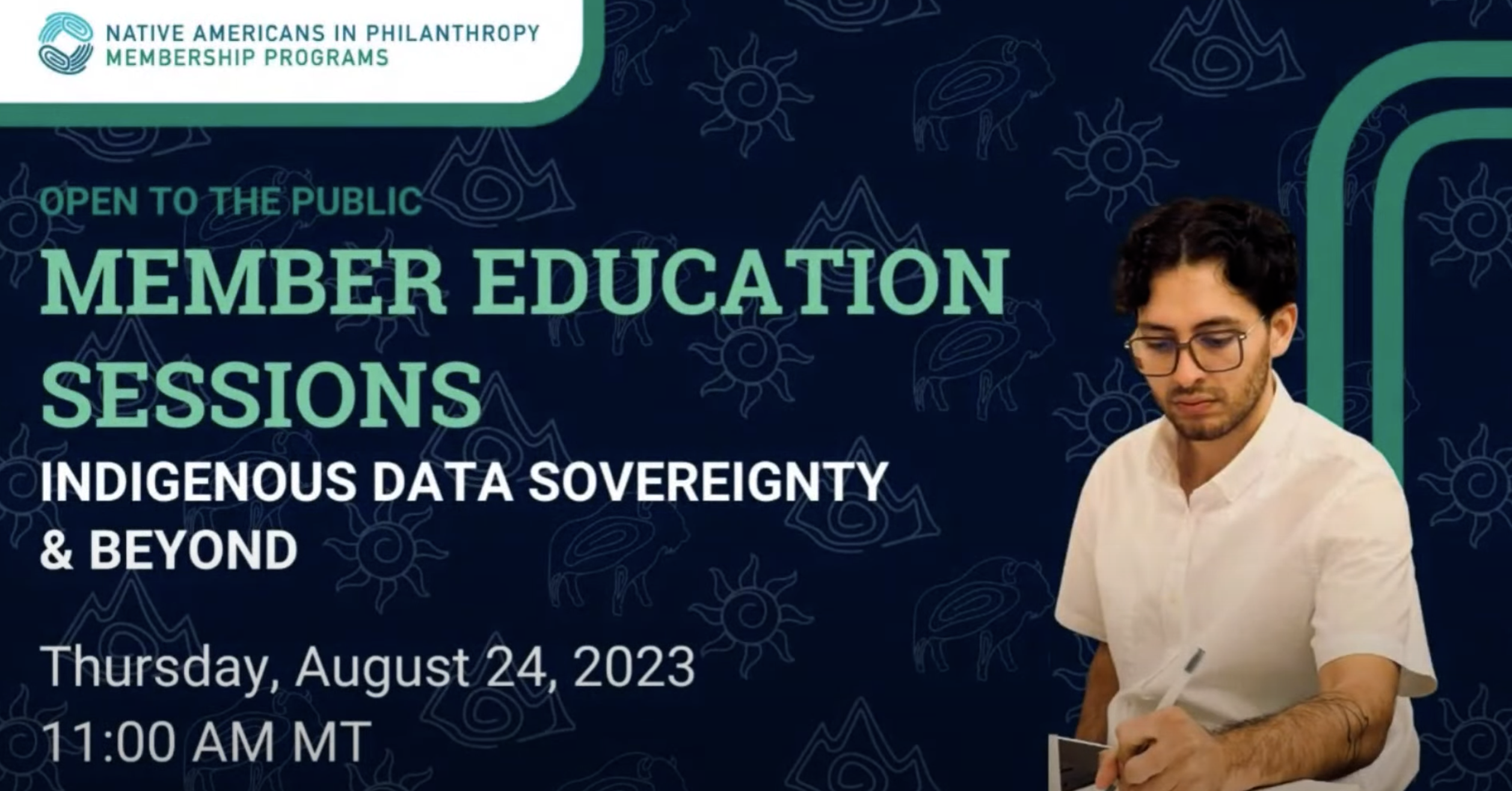
Member Education Sessions: Indigenous Data Sovereignty & Beyond
Event Description
Data makes the world go round! In the philanthropic sector, data drives where money is placed. However, for Indigenous peoples and communities, data is a complicated and nuanced topic. From erasure to mismanagement to data being used as a weapon, there are countless reasons why leaders in the sector are advocating for Indigenous Data Sovereignty through ethical data practices, cyber sovereignty, and more. Our moderator, Stephine “Steph” Poston, M.A. (Pueblo of Sandia), and Indigenous changemakers Carly Bad Heart Bull (Dakota/Muscogee) and Kimball Sekaquaptewa (Hopi) discuss how philanthropy can work differently to not only better support the exercising of Indigenous Data Sovereignty, but also uplift the vital infrastructure and policy reform needed for sustainable practices.
Watch the broadcast now on NAP’s YouTube Channel and be sure to subscribe to the NAP YouTube channel for more informative and important resources on Native communities.
About Our Speakers
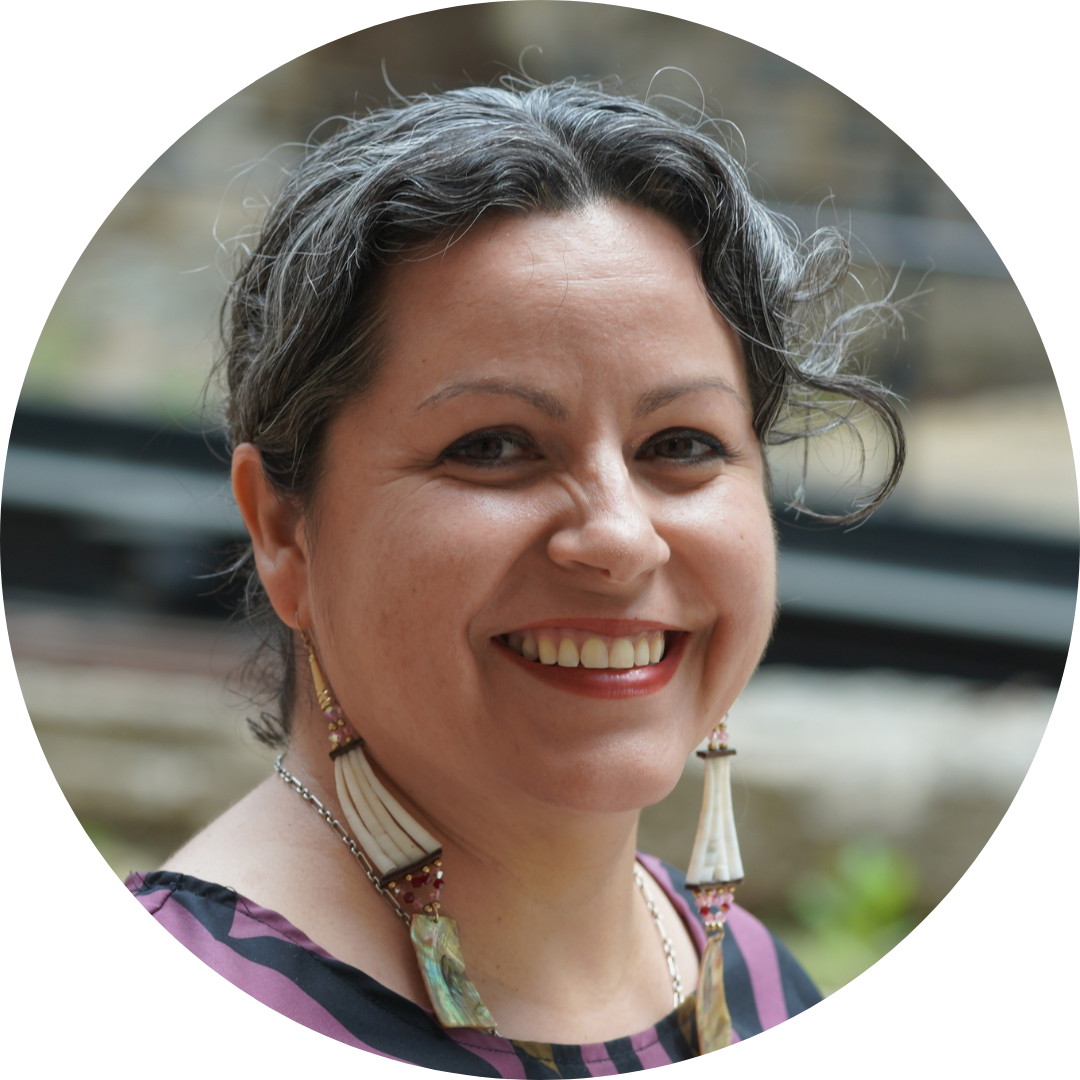
Carly Bad Heart Bull (Dakota/Muscogee) (she/her)
Executive Director, Native Ways Federation
View BioCarly Bad Heart Bull (Bdewakantunwan Dakota/Muscogee Creek and a citizen of the Flandreau Santee Sioux Tribe in South Dakota) is the Executive Director of the Native Ways Federation (NWF), a national non-profit founded by seven of the most reputable Native-led non-profits in the country. NWF’s mission is to activate and expand informed giving to non-profits in Indian country through donor education and advocacy. She came to NWF from the Bush Foundation, where she served as the Native Nations Activities Manager since 2014. Her service area encompassed Minnesota, North Dakota, South Dakota and the 23 Tribal nations within the region. Carly has a background in law and was previously an Assistant County Attorney for Hennepin County Attorney’s Office (Minnesota) in its child protection division. She has also taught the Dakota language to early childhood students in South Minneapolis. She currently serves as vice chairwoman of the board of local non-profit and Indigenous farm, Dream of Wild Health, and is also on the board of Native Americans in Philanthropy, a national organization with a mission to promote equitable and effective philanthropy in Native communities. In 2020, Carly was named a Minnesota Attorney of the Year, for her instrumental work on reclaiming the Dakota name of Minneapolis’ largest lake (formerly Lake Calhoun) to Bde Maka Ska. In 2019, she was selected by the W.K. Kellogg Foundation as a Community Leadership Network Fellow, a program for leaders across the country working to create transformational change toward a more equitable society for all. Carly holds a Juris Doctorate degree from the University of Minnesota Law School, a Bachelor of Arts degree from the University of Minnesota, and an Associate of Arts degree from Minneapolis Community and Technical College. Carly lives in Bdeota Otunwe (Minneapolis, or City of Many Lakes) with her young son Quill.

Kimball Sekaquaptewa (Hopi) (she/her)
Chief Technology Director and Tribal Broadband Connectivity Project Director, Santa Fe Indian School
View BioKimball Sekaquaptewa is the Chief Technology Director and Tribal Broadband Connectivity Project Director at the Santa Fe Indian School. Since 2009, Ms. Sekaquaptewa has addressed regional broadband issues through the construction of middle mile networks by working with Tribes to aggregate demand and harness local expertise to build Tribally-owned networks. Through COVID-19, she assisted Tribes to solve their connectivity issues through the construction of wireless residential networks. Currently, she is leading a workforce capacity program for the Pueblos to implement and maintain sustainable networks. In 2018, she worked with six Tribes in New Mexico to complete construction of two 60-mile fiber optic networks bringing high speed Internet to rural underserved Pueblos. In 2019, FCC Chairman Ajit Pai appointed her to the Broadband Deployment Advisory Committee Low Income Working Group. Also, in 2019, she received the Women in Technology award from the New Mexico Technology Council. In her early work, she endeavored to build Tribal capacity and the next generation of Native IT professionals through a National Science Foundation IT Experiences for Students and Teachers award that provided STEM opportunities for Native youth. In 2016, she helped with a USDA RUS Distance Learning and Telemedicine Grant that connected twelve Tribal libraries to the SFIS distance learning center, expanding Native language classes and promoting language revitalization. Ms. Sekaquaptewa is from the Hopi Tribe of Arizona. She is the mother of three children from the Pueblo de Cochiti. She holds an undergraduate degree from Stanford University and is a Woodrow Wilson fellow with an MBA from the University of New Mexico.
Winoka Yepa (she/her/asdzaan)
Chief Technology Director and Tribal Broadband Connectivity Project Director, Santa Fe Indian School
View BioWinoka Yepa (she/her/asdzaan), is Diné originally from Shiprock, New Mexico, which is located on the Navajo Nation, also known as Dinétah. Yepa brings a wealth of experience from the arts, museum, and education fields. Most recently, Yepa was the Senior Manager of Museum Education at the IAIA Museum of Contemporary Native Arts. As a part of her role, Yepa re-established and developed the museum’s education program, re-designed the museum’s artist residency and mural program, developed curriculum centered in decolonial methodologies, and created more community-centered programming. Yepa continues to participate in the arts and culture field with her new role as the City of Santa Fe Arts Commissioner. Yepa’s appointment to the arts commission was unanimously approved by the Mayor and City Council. Yepa was also a graduate researcher for the University of New Mexico, in which she collaborated with the University of California- Los Angeles and the University of Arizona to develop a national study of Indigenous language immersion programs that identified Native communities’ efforts to strengthen their language education through immersion teaching methods. Yepa assisted in the development of a national database of Indigenous language immersion programs in the United States with the objective to support education practices for Native faculty and students. As a part of this study, Yepa co-authored an article that explores relationality and relational accountability in Indigenous education, contextualizing these processes within a current U.S.-wide study of Indigenous-language immersion (ILI) schooling. Yepa is also a doctoral candidate in education at the University of New Mexico, in which her dissertation focuses on the development of a pilot program titled “The Reflection Project: A Study on Indigenous Identity and Storywork,” which aims to identify alternative and new representations of Indigenous identity from a decolonial framework, with emphasis on Indigenous epistemologies and storytelling. Winoka is the newly appointed City of Santa Fe Arts Commissioner.
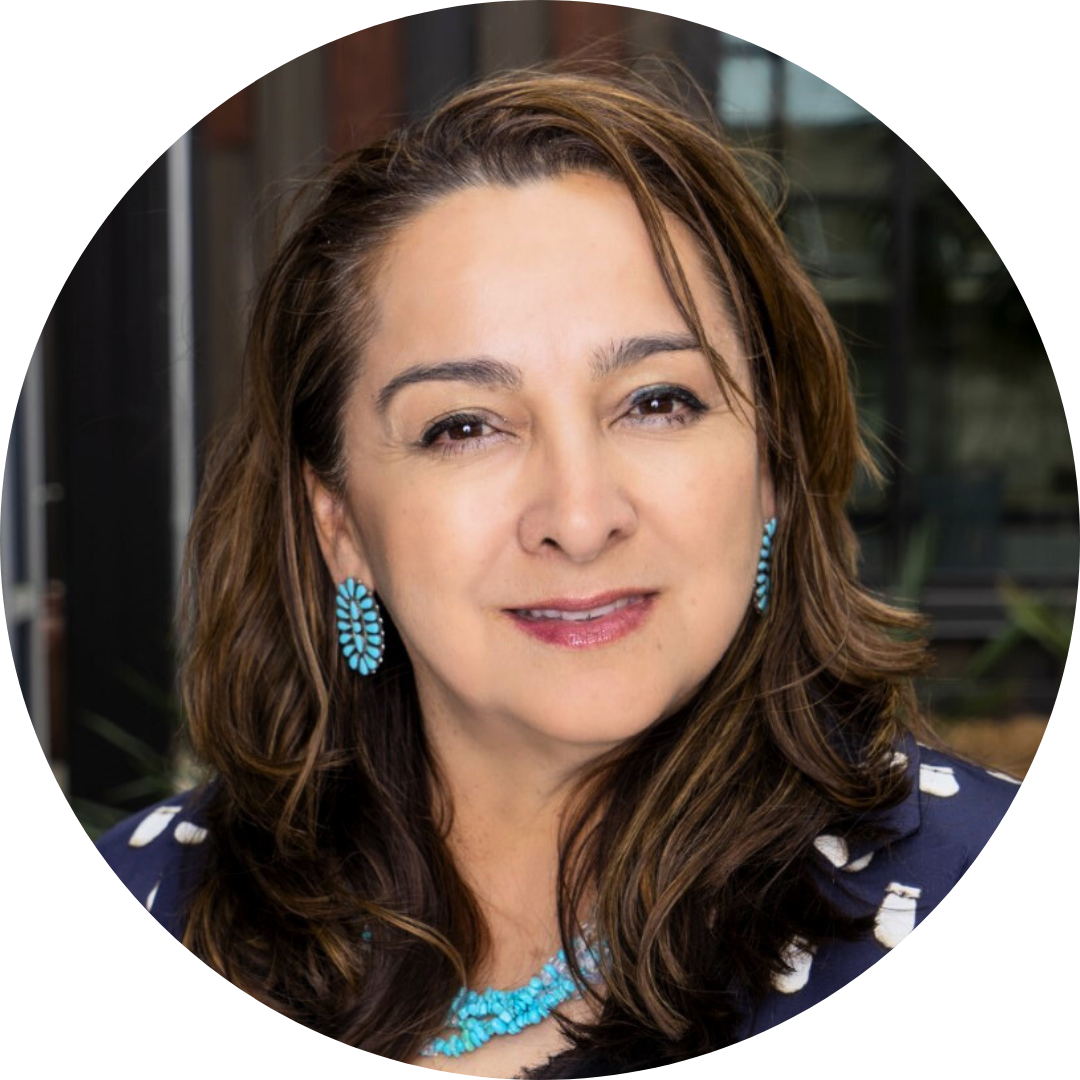
Stephine "Steph" Poston, M.A. (Pueblo of Sandia) (she/her)
President & CEO, Poston & Associates, LLC
View Bio“Steph” was born and raised on the Sandia Pueblo Indian Reservation. She worked for her Tribe for eleven years before launching Poston & Associates, a full-service communications firm.
Steph’s expertise includes strategic facilitation, capacity-building training, leadership development, strategic communication, and event planning. She has worked with numerous Tribes and Tribal entities in New Mexico and throughout Indian Country on public relations and marketing campaigns, sacred site protection, voter empowerment, water rights, Tribal policy development, economic development, education, and healthcare.
She is a co-founder of Native Women Lead and recent past Chairwoman of the Southwestern Association for Indian Arts which hosts Indian Market.
Stories & Updates
Changing the conversation.Get the latest NAP news.
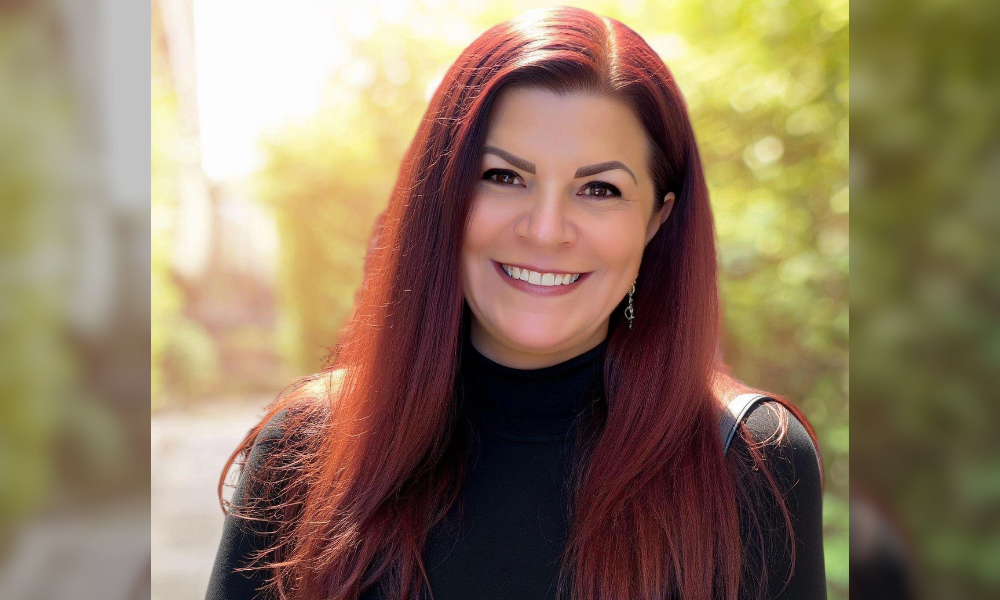
NAP Welcomes Sarah EchoHawk as Managing Director
We are excited to welcome Sarah EchoHawk (Pawnee) as the Managing Director of Native Americans in Philanthropy.
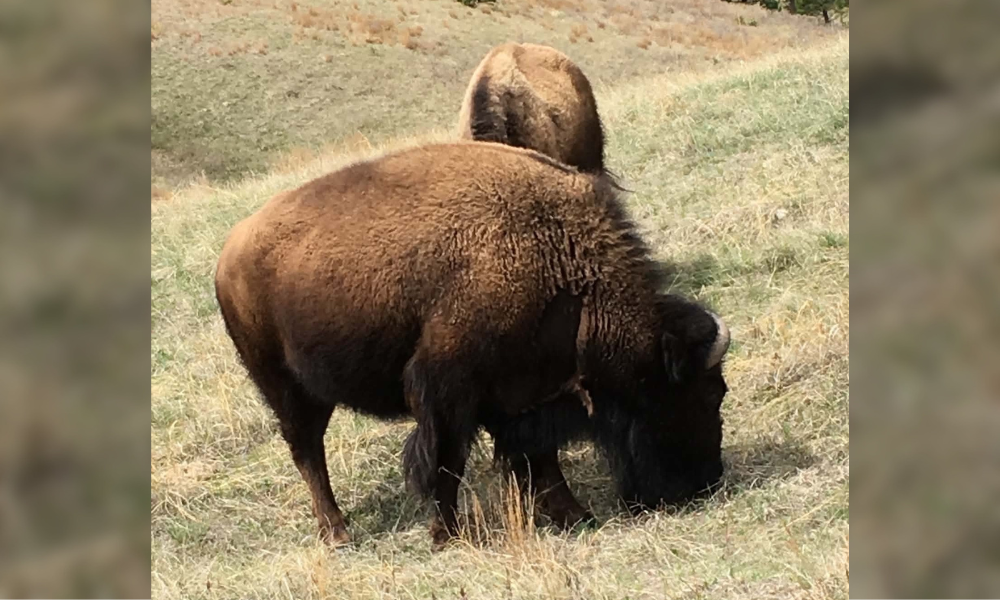
Restoring Buffalo, Restoring a Way of Life: The Knife Chief Buffalo Nation Society
The Lakota philosophy continues through the work of the Knife Chief Buffalo Nation Society, a community-led effort restoring buffalo, culture, spirituality, and connections between generations.
.jpg)
Indigenous Tomorrows Fund Expands in Year Two With $1.65 Million Investment in Youth-Led Grantmaking
Native Americans in Philanthropy, Newman’s Own Foundation, and Novo Nordisk are thrilled to announce the recipients of the 2025 Indigenous Tomorrows Fund (ITF) grants.
.jpg)
The Indigenous Tomorrows Fund: 2026 Grant Applications Now Closed!
Native Americans in Philanthropy, Newman’s Own Foundation, and Novo Nordisk are thrilled to announce the recipients of the 2025 Indigenous Tomorrows Fund (ITF) grants.
.jpg)
Native Youth Grantmakers at NAPCON26
The 2026 Native Youth Grantmakers (NYG) convened together for the first time on the homelands of our Coast Salish relatives. Beyond gaining new relatives and networking at every turn, the retreat’s agenda included courses in personal development, cultural grounding, and exploring each participant’s role as members of their respective communities and their new place within the philanthropic sector.
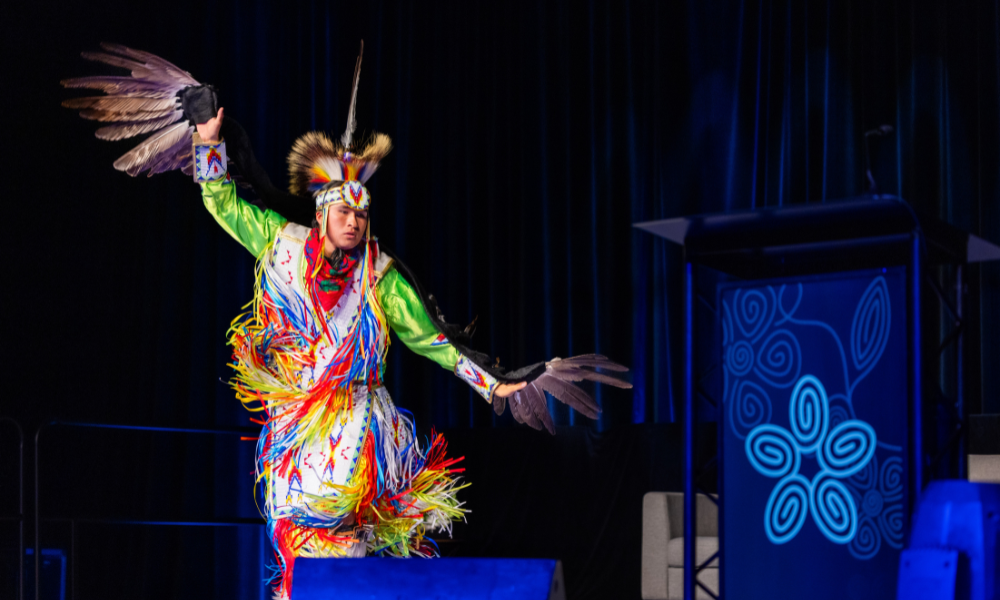
NAPCON26: Highlights From Our 2026 Annual Conference
Over three days in Riverside, California, Native leaders, funders, organizers, and community members gathered for the Native Americans in Philanthropy 2026 Annual Conference.
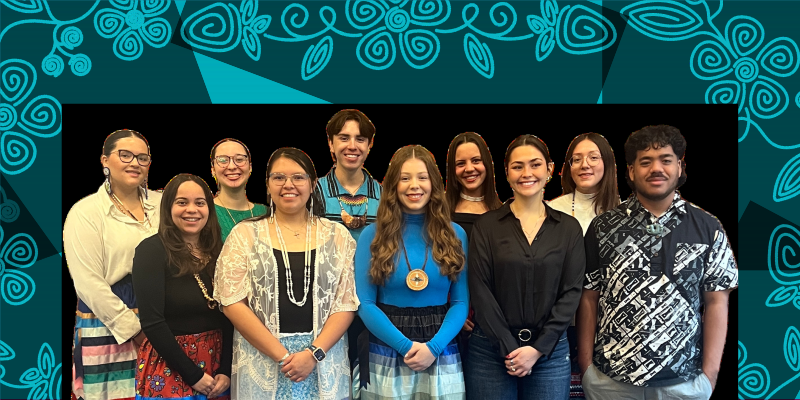
Native Youth Grantmakers in Seattle
The 2026 Native Youth Grantmakers (NYG) convened together for the first time on the homelands of our Coast Salish relatives. Beyond gaining new relatives and networking at every turn, the retreat’s agenda included courses in personal development, cultural grounding, and exploring each participant’s role as members of their respective communities and their new place within the philanthropic sector.
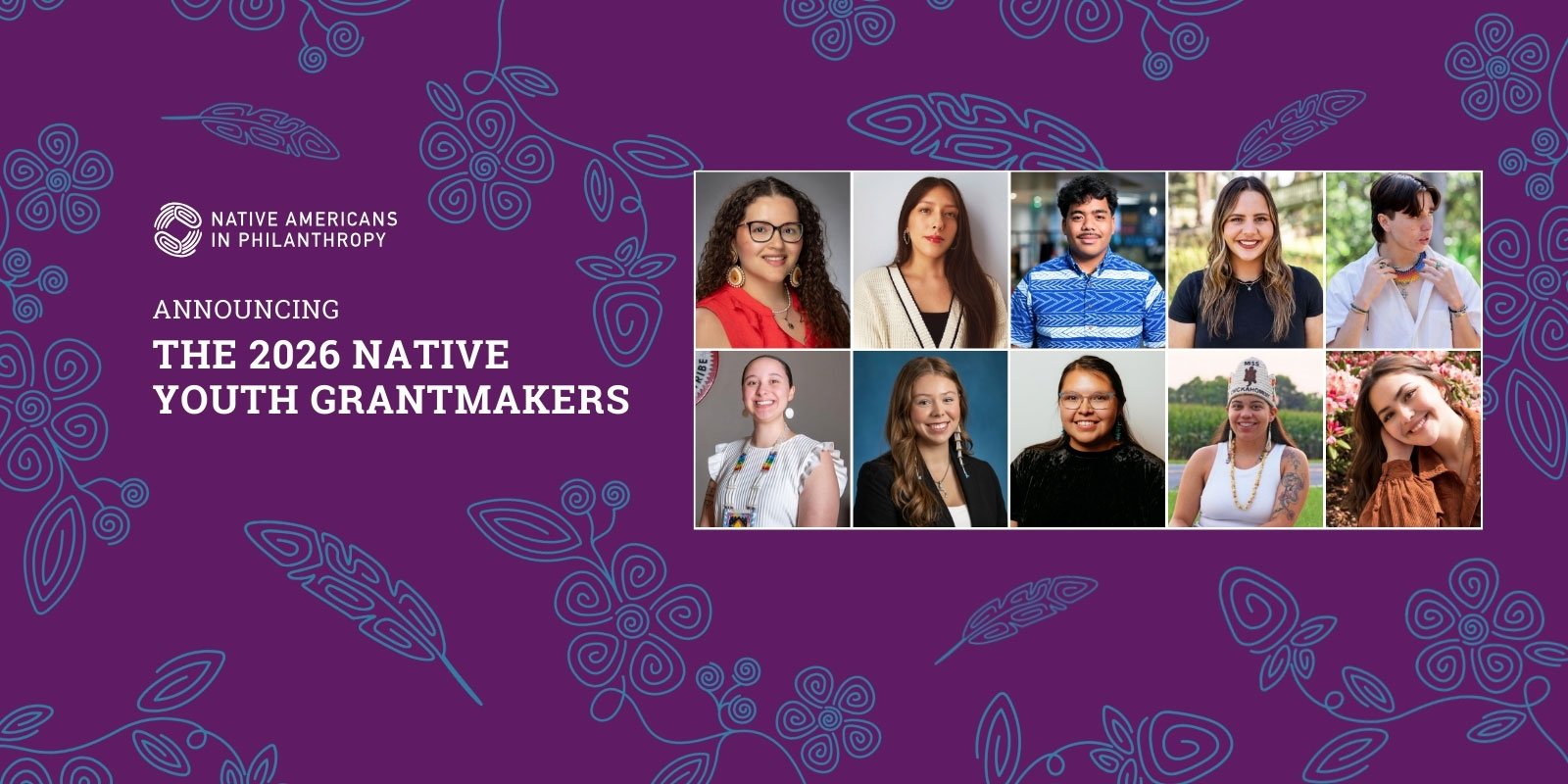
Native Americans in Philanthropy Announces Third Cohort of Native Youth Grantmakers
Native Americans in Philanthropy (NAP) is thrilled to announce the 2025-2026 Native Youth Grantmakers. These extraordinary and highly accomplished young individuals are the embodiment of passion, excellence, and a deep commitment to making a positive difference in their communities. As we welcome this new cohort, we celebrate their achievements, their futures, and their dedication to advancing Native-led philanthropy.
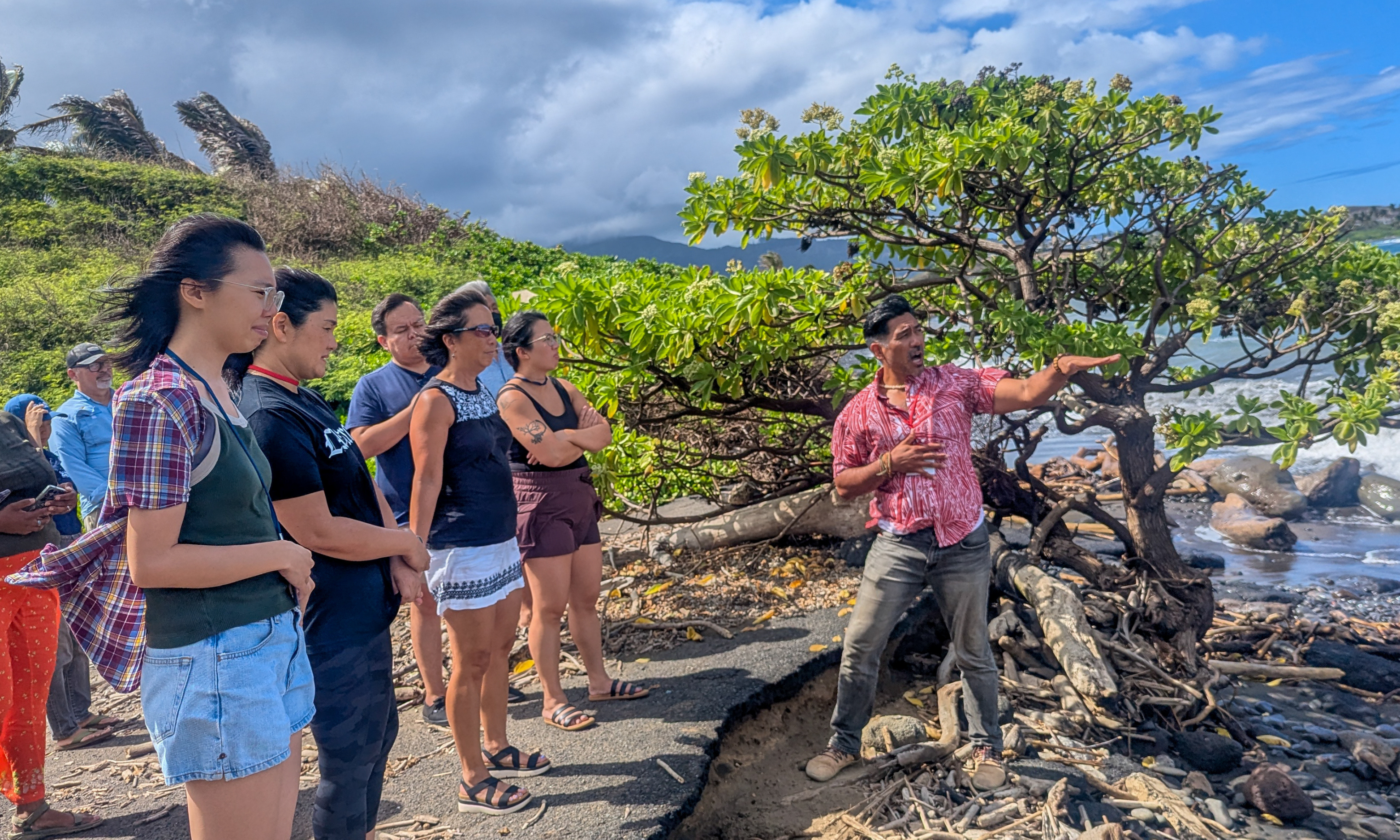
Standing Hand-in-Hand: Reflections on Reclamation, Partnership, and Possibility in Hawaiʻi
Native Hawaiian Philanthropy, Native Americans in Philanthropy, and Asian Americans/Pacific Islanders in Philanthropy came together for the Power in Solidarity: Hawaiʻi Funder Tour