
Public-Private Partnerships
There is a growing recognition that many public policy issues are more complex than one sector can address alone. One path towards lasting, systemic change? Public-private partnerships.
Public-private partnerships are not new – the federal government, states, and the private sector often work together on a shared mission. However, there’s a long way to go in leveraging these types of collaborations to support Tribal Nations and Native-led work.
What is The Office of Strategic Partnerships (OSP)?
Native Americans in Philanthropy’s Office of Strategic Partnerships works to bring awareness of the needs and unique status of Tribal communities as federal-philanthropic initiatives and programs are developed.
Simply put, the OSP is an office that paves the road between the federal government, philanthropy, and tribal communities. The OSP will assist with building partnerships with Tribal leaders, philanthropy, nonprofit, and governmental partners, by leveraging resources and bringing awareness of the needs and unique status of Tribal communities focusing on conservation, economic development, and education.
Housed within the Office of the Assistant Secretary – Indian Affairs, the office works in close coordination with the White House Council on Native American Affairs, and other federal partners to help Tribes and Tribal organizations develop and build long-term sustainable bonds between philanthropy, non-profit organizations, and the business community.
In the U.S. Department of the Interior’s press release, DOI note that the new Office of Strategic Partnerships “will work to bring awareness of the needs and unique status of Tribal communities as federal-philanthropic initiatives and programs are developed.”
When was the OSP launched?
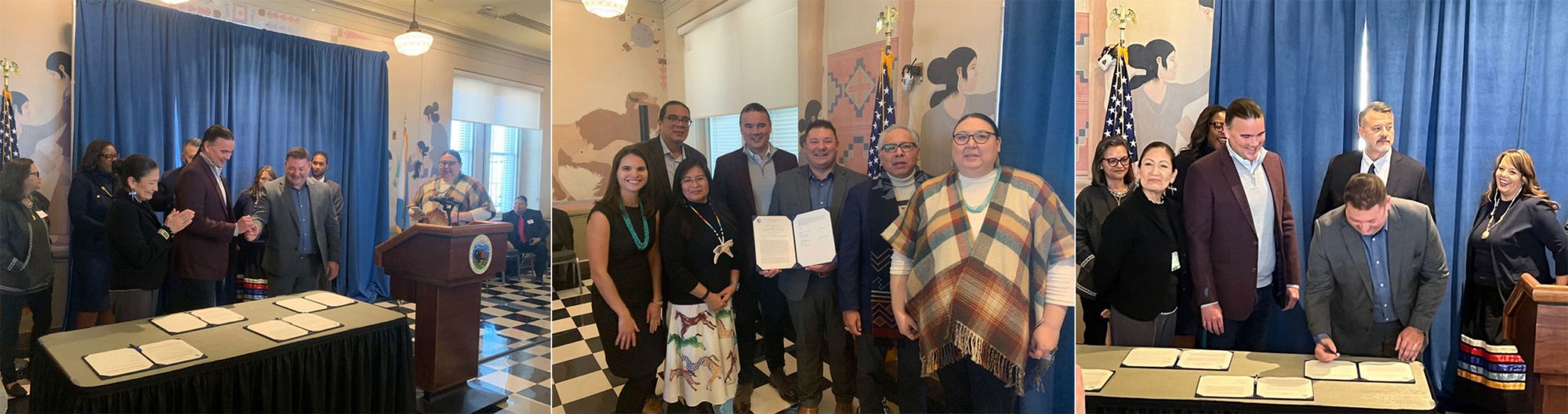
The new OSP was announced publicly at the 2022 White House Tribal Nations Summit. NAP’s CEO, Erik Stegman, joined representatives from over 300 Tribes to attend the Summit, including a welcome reception hosted by Secretary Haaland. A special event, co-hosted by NAP with the Department of Interior to officially sign our historic agreement and to highlight funders and nonprofit partners working to support Tribal Nations, was held on Friday, December 2nd.
2022 White House Tribal Nations Summit
Secretary Deb Halaand (Pueblo of Laguna) speaks at the 2022 White House Tribal Nations Summit
“At the Department of the Interior we have a solemn duty to honor and strengthen the federal government’s nation-to-nation relationships with Tribes. Today’s announcements reaffirms that commitment and will bring increased and much needed resources to Indigenous communities,” said Secretary Deb Haaland, the first Native American to serve as a cabinet secretary, at the announcement.
“What an honor to sign our MOU today with the Department of the Interior to create a new Office of Strategic Partnerships. This new office will bring private funders together with government officials to unlock federal dollars for Tribes and make them work better for their communities. I’m grateful to Secratary, Deb Haaland, and Assistant Secratary for Indian Affairs, Bryan Newland, for their leadership.” Erik Stegman, CEO of Native Americans in Philanthropy
How Can The Philanthropy Sector Engage With This Office?
Through the OSP, there will be long-term opportunities to develop public-private partnerships to support Tribally-led projects with a focus on the critical areas of conservation, education, and economic development initiatives in Native communities. Native Americans in Philanthropy will continue to work to support philanthropic investment and philanthropic support in the U.S. for Tribal governments, their conservation work, and support co-management efforts through its conservation pledge and funding collaborative.
Many global philanthropic investments in Indigenous movements and Native-led initiatives neglect U.S. based Tribes. Despite underfunding, Tribes consistently demonstrate that they are the best stewards of their lands, waterways, and cultural ways of life using Indigenous ecological knowledge and their unique legal and political relationship with the U.S. government.
Native Americans in Philanthropy would like to share our gratitude for the community of partners who have been in solidarity with our work to increase the visibility of Native people and communities, educate funders, establish meaningful relationships and increase funding to Indigenous-led organizations, movements, and Tribal Nations.