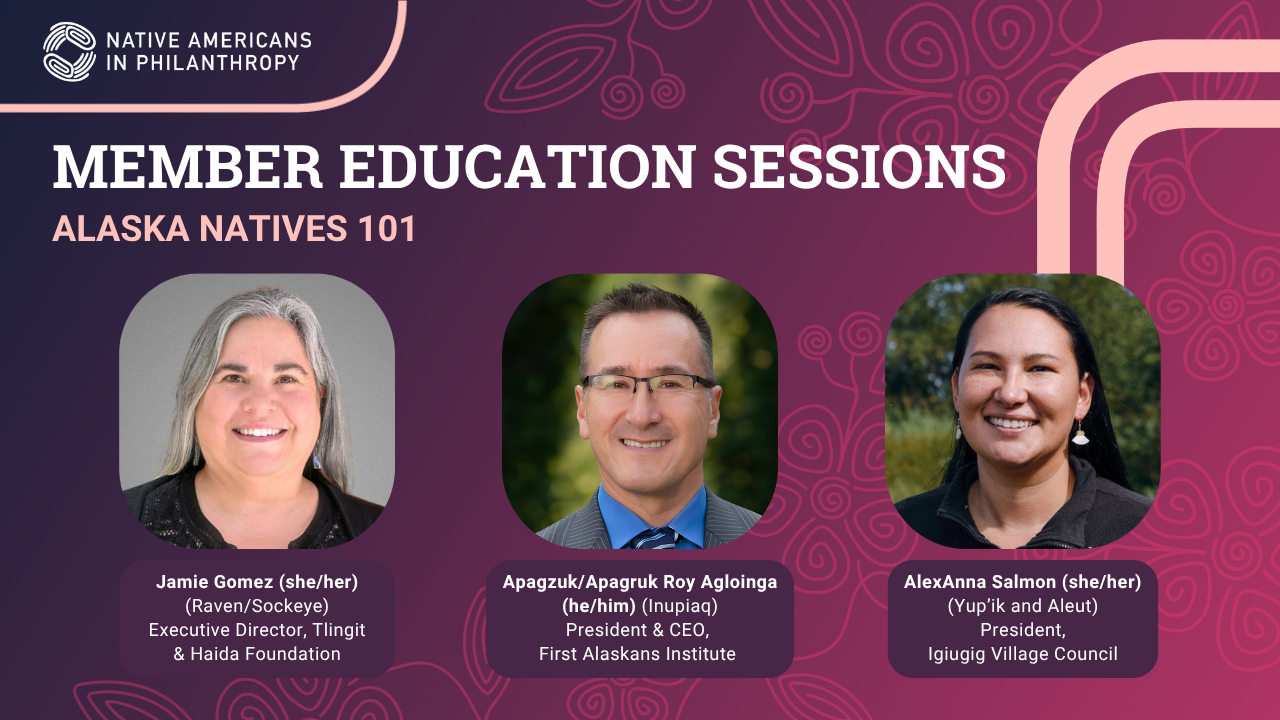
Member Education Sessions: Alaska Natives 101
Event Description
As Native Americans in Philanthropy prepares to host our 2027 Annual Conference in relationship with our Alaska Native relatives, we are honored to uplift the incredible community initiatives these regions continue to grow in this Member Education Session.
This discussion centers our Alaska Native peoples, encouraging the philanthropic sector to approach these partnerships with a deeper understanding of these communities, their histories, and their priorities. Join us as we hold space for Alaskan community leaders and nonprofit professionals to share what they hope to see from funders, what funding priorities they have received from community members, and what makes the great land regions uniquely positioned as a model for sustainable collaboration.
Our audience will learn more about how to effectively support Alaska Natives as well as deepen understandings of the historical context that has shaped these communities. Join AlexAnna Salmon (Yup’ik and Aleut), President of the Igiugig Village Council, Apagzuk/Apagruk Roy Agloinga (Inupiaq), President & CEO of the First Alaskans Institute, and Jamie Gomez (Raven/Sockeye), Executive Director of the Tlingit & Haida Foundation, for an introduction to their communities.
Watch the broadcast now on NAP’s YouTube Channel and be sure to subscribe to the NAP YouTube channel for more informative and important resources on Native communities.
To continue learning, please explore these additional resources:
Alaska Native Tribes Infographic (PDF)
Alaska Native Heritage Center’s Interactive Cultural Tourism Map
Explore AFN’s Webinars and Podcasts
About Our Speakers
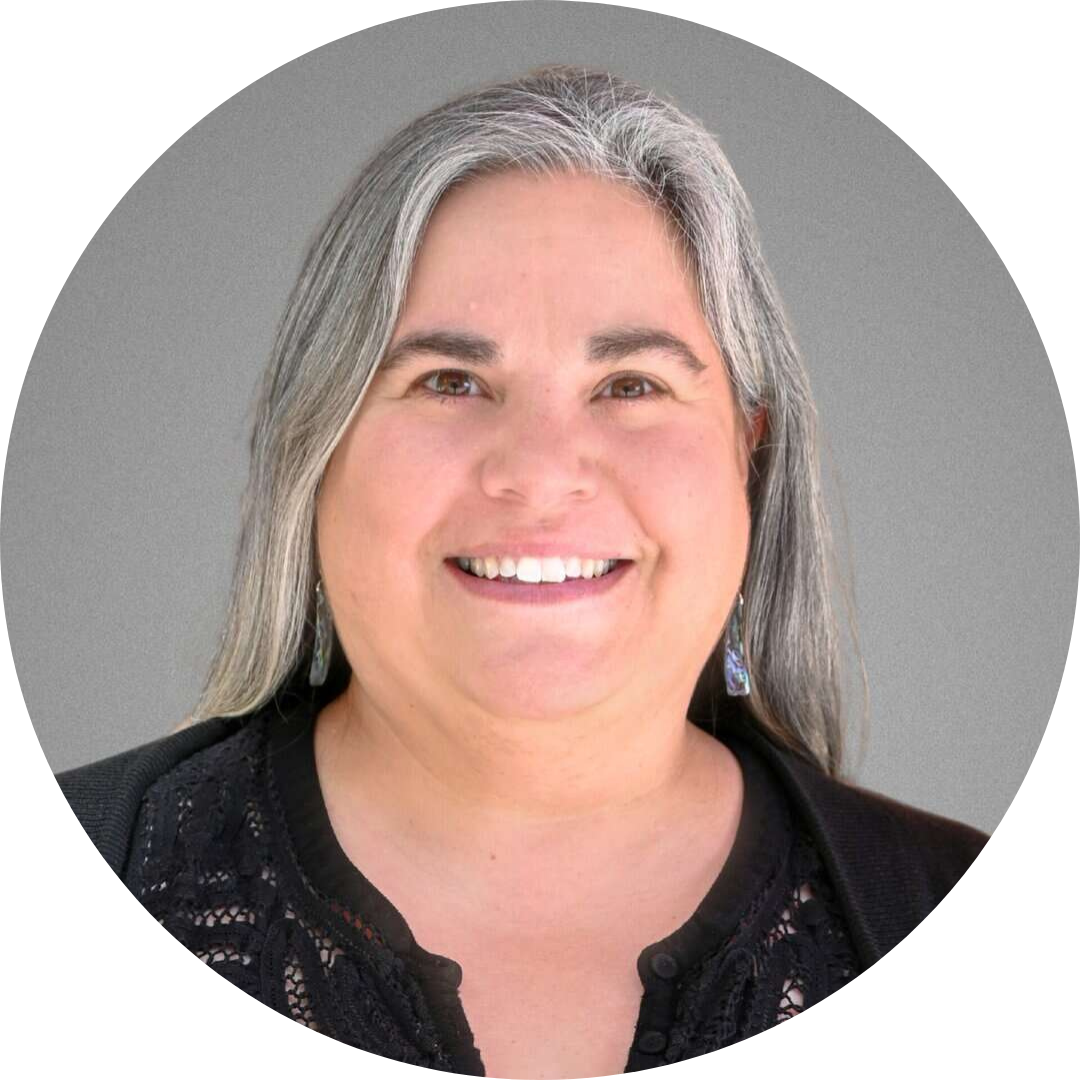
Jamie Gomez (Raven/Sockeye) (she/her)
Executive Director, Tlingit & Haida Foundation
View BioJamie Gomez serves as the Executive Director of the Tlingit & Haida Foundation, bringing over
25 years of experience working with national Native organizations to support Native
Nations and their citizens.
Prior to her current role, Jamie served at the National Congress of American Indians
(NCAI) and the National Indian Health Board (NIHB), where she contributed to key
initiatives such as Native Vote, Census, First Kids 1st, the movement to change Native
mascots, NCAI’s 75th Anniversary, and Indian Country Today.
Jamie’s dedication to Native Country began in college, when she was elected as a
student representative on her Nation’s council and helped establish the NCAI Youth
Commission. Her leadership journey has also included cultural education through the
Chilkoot Culture Camp, where she learned from elders and now shares that knowledge
with the next generation.
Jamie is a proud wife of a retired Army Veteran and mother of two boys. Her Tlingit
name is Skweit and she is Raven from the Lukaax.adi clan (Raven/Sockeye) of Deishú
(Haines, Alaska).
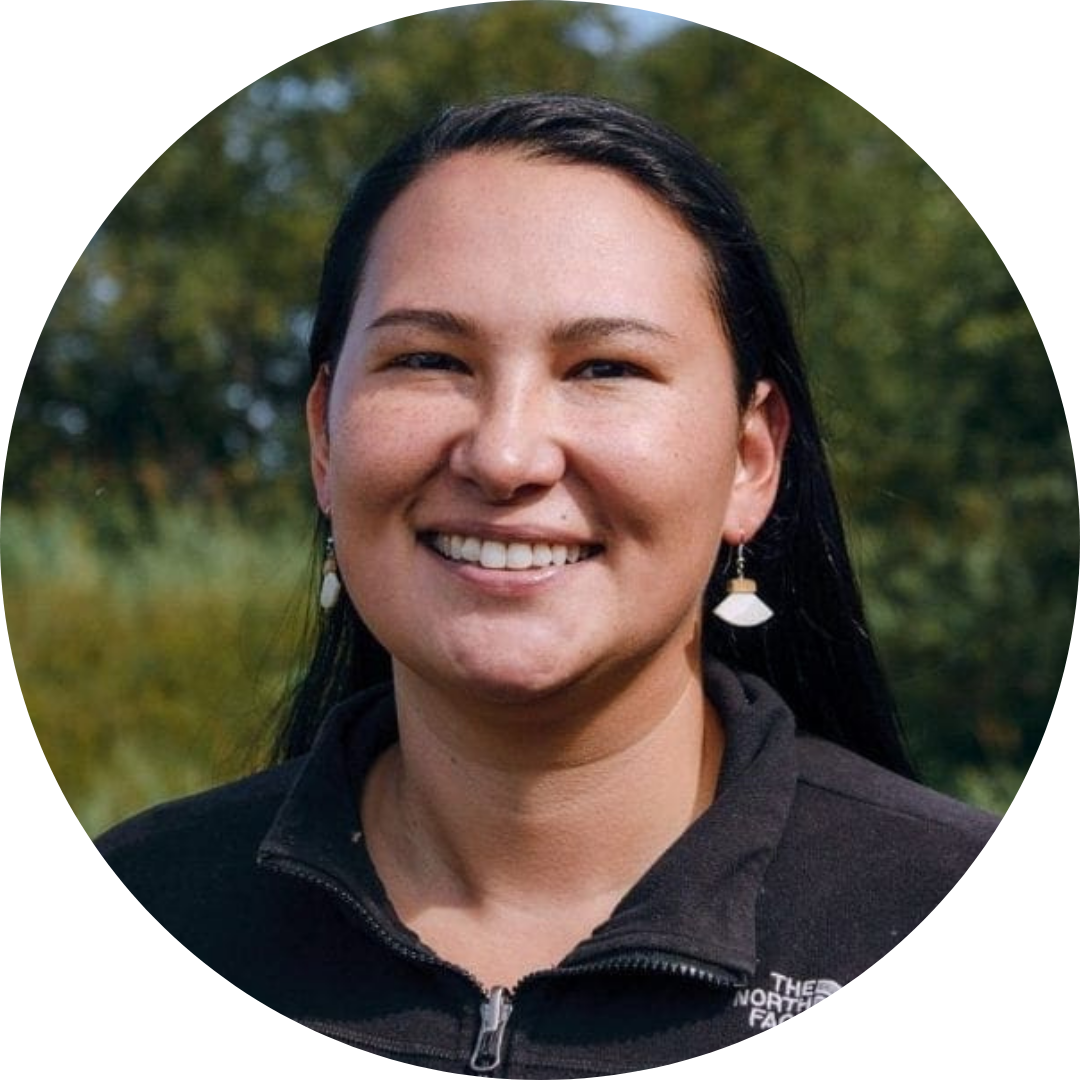
In 2008, AlexAnna graduated from Dartmouth College with a dual Bachelor of Arts degree in Native American Studies and Anthropology. After graduating, she returned to work for the Igiugig Tribal Village Council, where she was elected President and, until 2016, also held the role of Administrator. AlexAnna serves as a member of the Igiugig Native Corporation board, which is responsible for the stewardship of 66,000 tribal acres. She also serves on the Nilavena Tribal Health Consortium and is a member of the Smithsonian Museum of Natural History’s Advisory Board. She received her Master’s Degree in Rural Development from the University of Alaska Fairbanks in 2021.
In her work as President of the Igiugig Village Council, AlexAnna has been a driving force behind the community’s efforts to generate its own energy from renewable sources. In 2015, she was invited to President Obama’s roundtable discussion with Alaska Native leaders and was praised by Sen. Dan Sullivan in 2017 on the Senate floor for helping strengthen her community and making it an incredible place to live. AlexAnna loves raising her kids in the subsistence way of life, revitalizing Indigenous languages, and traveling.
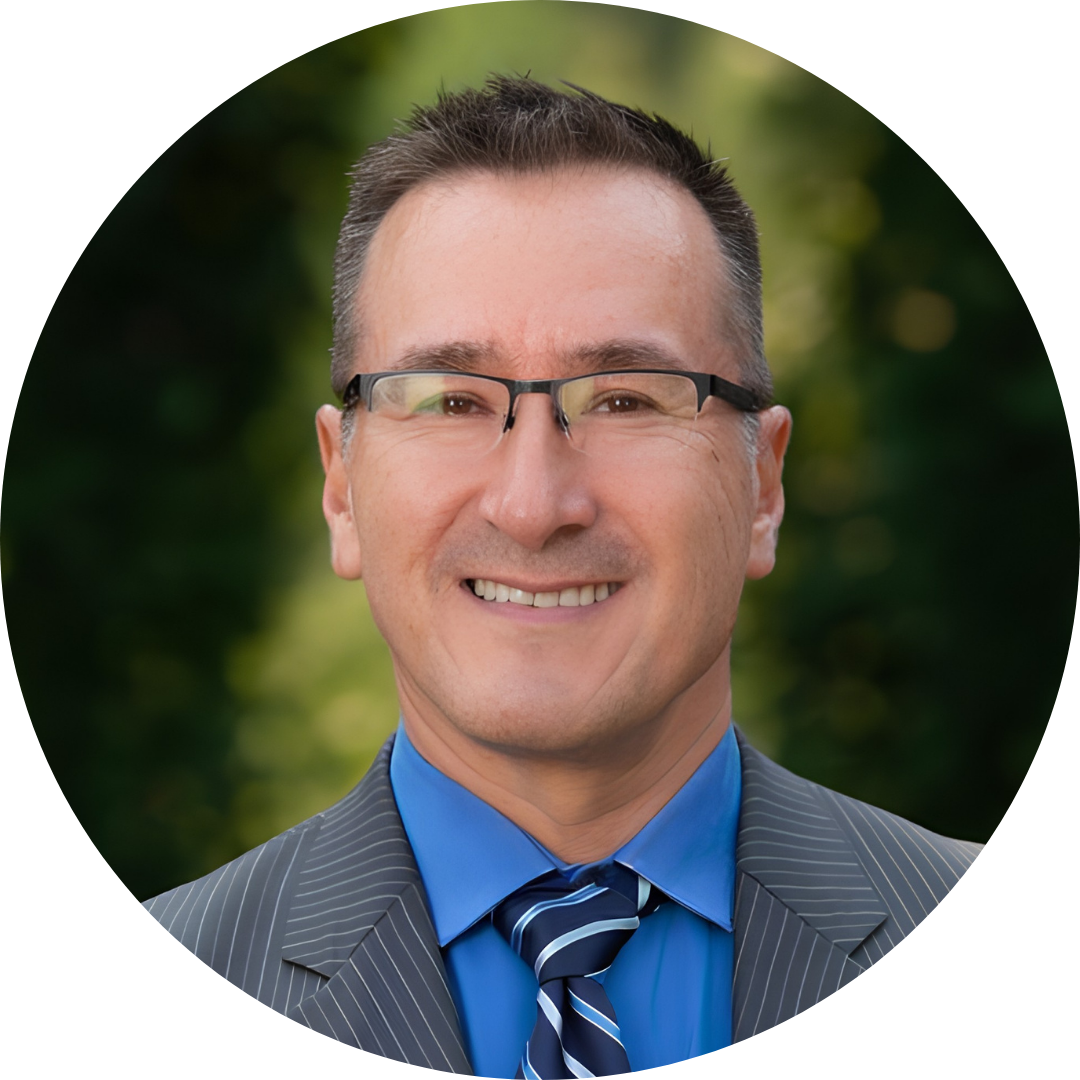
Apagzuk/Apagruk is the Yup’ik/Iñupiaq spelling of his name and he goes by both, honoring the Yup’ik name he was given and his Iñupiaq identity. Apagruk comes to FAI with a background in nonprofit management, philanthropy, rural health, government policy and Iñupiat language preservation.
With maternal roots in the Bering Straits region and paternal roots in Spain, the Philippines and New England, he was raised immersed in Iñupiat and Yup’ik cultures. Most recently, he served as an external affairs and granting program officer for the Rasmuson Foundation. Prior to Rasmuson, he also held a diverse array of leadership roles within Alaskan municipal, tribal, business and political organizations and has an extensive background in volunteerism and service, most notably in support of arts and language education.
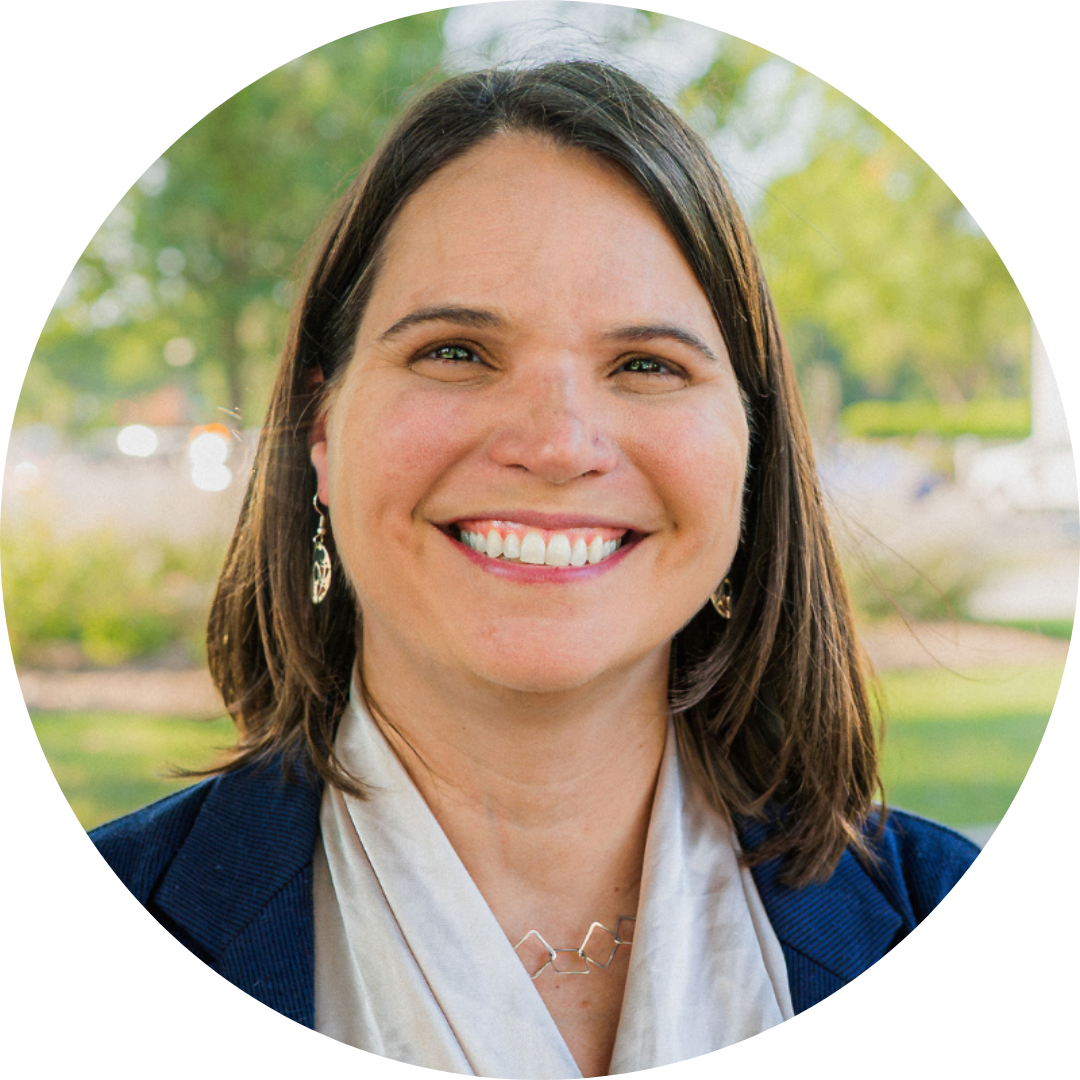
Rachel Brown (she/her)
Senior Advisor for Conservation and Strategic Partnerships, Native Americans in Philanthropy
View BioRachel brings over 18 years of experience in government relations and policy development to her work at Native Americans in Philanthropy. She previously served in a Senior Advisor role at the Department of the Interior (DOI). In this role, she worked with DOI leadership to advance priorities related to Native American Affairs, economic development, public-private partnerships, and conservation initiatives.
During her time at Interior, she also had roles with the Bureau of Reclamation and the National Park Service. In her role with Reclamation, she supported the negotiation and implementation of Indian water rights settlements and worked on projects and agreements with foreign countries seeking technical expertise on water resources issues. Rachel joined the Department of the Interior as a Presidential Management Fellow with the National Park Service’s American Indian Liaison Office, where she worked on negotiations to create the first Tribal National Park and advised Park Service leadership on issues relating to cultural and natural resource protection.
Before joining the Department of the Interior, she worked for the Senate Homeland Security and Governmental Affairs Committee, where her portfolio included Gulf Coast recovery following hurricanes Katrina and Rita, and the federal disaster response to the Deepwater Horizon oil spill and the 2010 earthquake in Haiti.
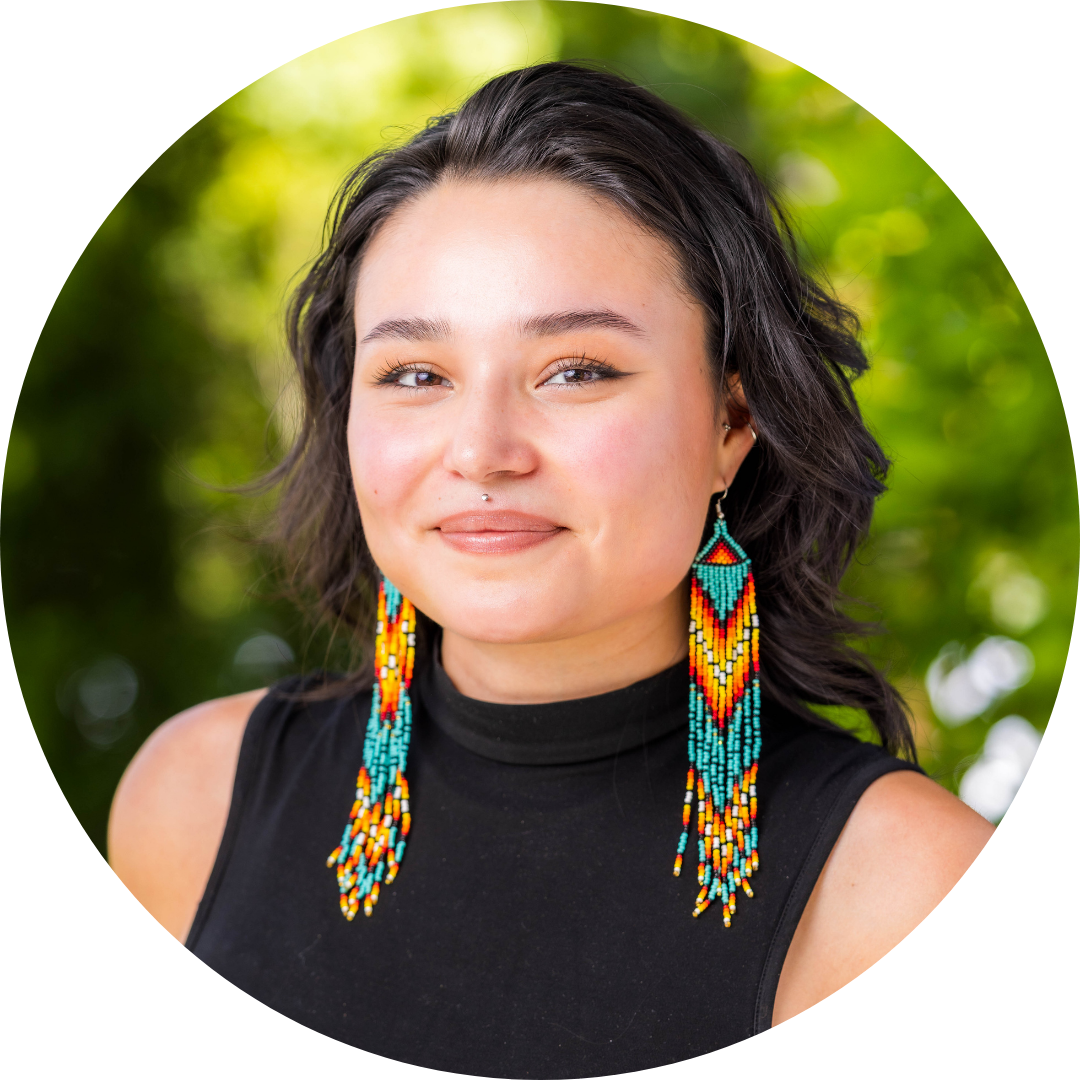
Shandiin Vandervere (Diné) (she/her)
Education Programs Manager, Native Americans in Philanthropy
View BioShandiin was born and raised on Diné Bikeyah, filtering through many different towns on the Navajo Nation during her childhood. She currently lives on traditional Ohlone and Esselen lands, now recognized as the Monterey Bay in California.
Her community has guided her professional work, where she has focused on supporting Indigenous-led nonprofits in communication and development roles, working with grassroots organizations like Yee Há’olníi Dóo or larger legacy organizations like the Association on American Indian Affairs.
With a deep appreciation for traveling and learning from new perspectives, she is grateful to have spent three years studying in France for her Bachelor of Arts in journalism and global communications. She continues to freelance as a journalist with work published through Navajo Times, Peacock Plume, and Changing Womxn Collective.
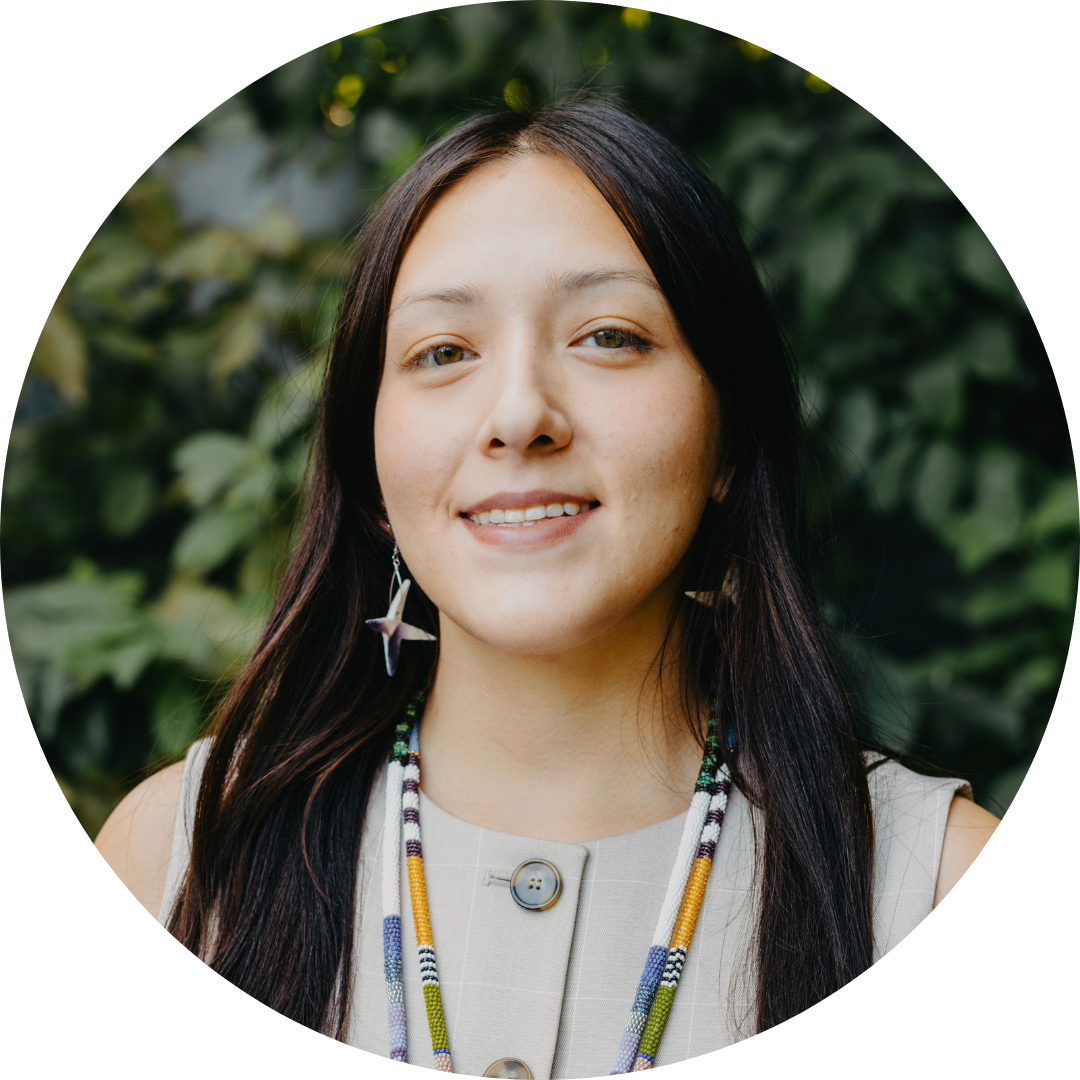
Madison Brown (Seneca Nation) (she/her)
Native Youth Grantmaker, Native Americans in Philanthropy
View BioShe served as Secretary (2022-2024) and subsequently, before her departure, served briefly as Co-President of the National Congress of American Indian Youth Commission, fostering her commitment to youth empowerment and tribal governance.
Currently, Madison is pursuing a degree in Sociology at her local community college, which has expanded her understanding of societal structures and community dynamics. In 2024, she was appointed to the Seneca Nation 1365 Resettlement Committee, a critical role tasked with developing a comprehensive plan for the Seneca Nation's resettlement within the Kinzua Dam Area, lands from which they were forcibly removed in 1965. This appointment highlights her dedication to historical justice and tribal sovereignty.
Beyond her more formal roles, Madison actively engages in community service and environmental stewardship, advocating for the land and more recently the Allegany River. Her recent internship with Congressman Langworthy (NY-23rd) provided valuable experience in intergovernmental coordination, fostering a keen interest in the intricate relationships between tribal nations and governmental entities, grounded in principles of sovereignty over their people and land.
Outside of her professional and advocacy endeavors, Madison is an avid outdoorswoman, finding inspiration and connection to the "teachings in the soil" through activities such as fishing, hunting, and gathering.
Stories & Updates
Changing the conversation.Get the latest NAP news.
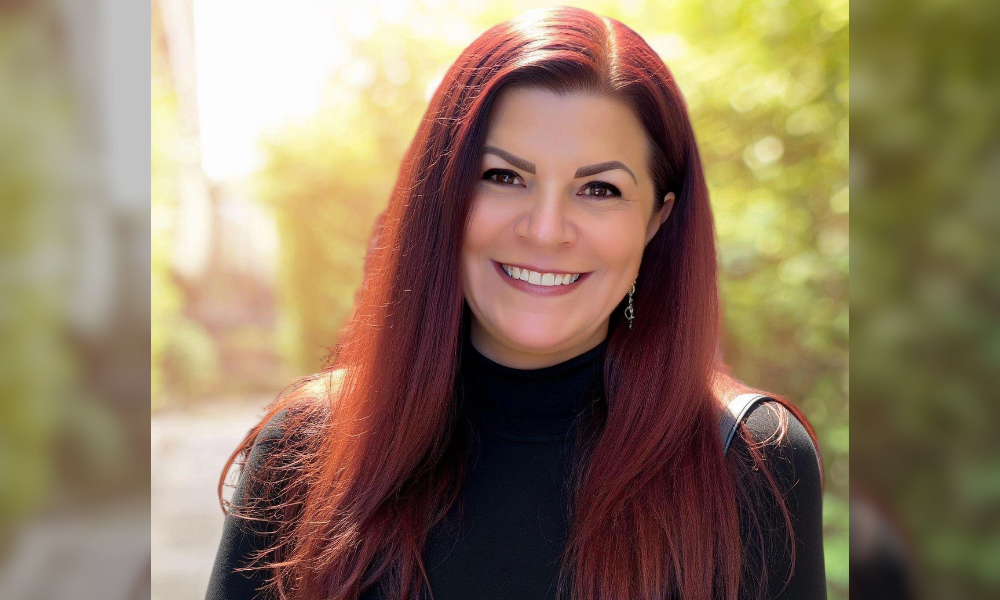
NAP Welcomes Sarah EchoHawk as Managing Director
We are excited to welcome Sarah EchoHawk (Pawnee) as the Managing Director of Native Americans in Philanthropy.
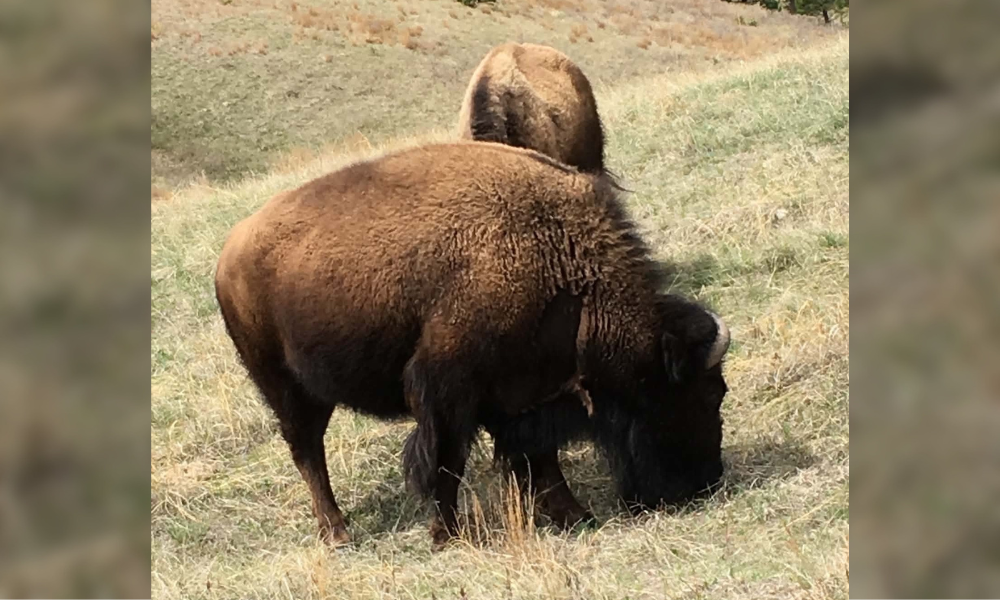
Restoring Buffalo, Restoring a Way of Life: The Knife Chief Buffalo Nation Society
The Lakota philosophy continues through the work of the Knife Chief Buffalo Nation Society, a community-led effort restoring buffalo, culture, spirituality, and connections between generations.
.jpg)
Indigenous Tomorrows Fund Expands in Year Two With $1.65 Million Investment in Youth-Led Grantmaking
Native Americans in Philanthropy, Newman’s Own Foundation, and Novo Nordisk are thrilled to announce the recipients of the 2025 Indigenous Tomorrows Fund (ITF) grants.
.jpg)
The Indigenous Tomorrows Fund: 2026 Grant Applications Now Closed!
Native Americans in Philanthropy, Newman’s Own Foundation, and Novo Nordisk are thrilled to announce the recipients of the 2025 Indigenous Tomorrows Fund (ITF) grants.
.jpg)
Native Youth Grantmakers at NAPCON26
The 2026 Native Youth Grantmakers (NYG) convened together for the first time on the homelands of our Coast Salish relatives. Beyond gaining new relatives and networking at every turn, the retreat’s agenda included courses in personal development, cultural grounding, and exploring each participant’s role as members of their respective communities and their new place within the philanthropic sector.
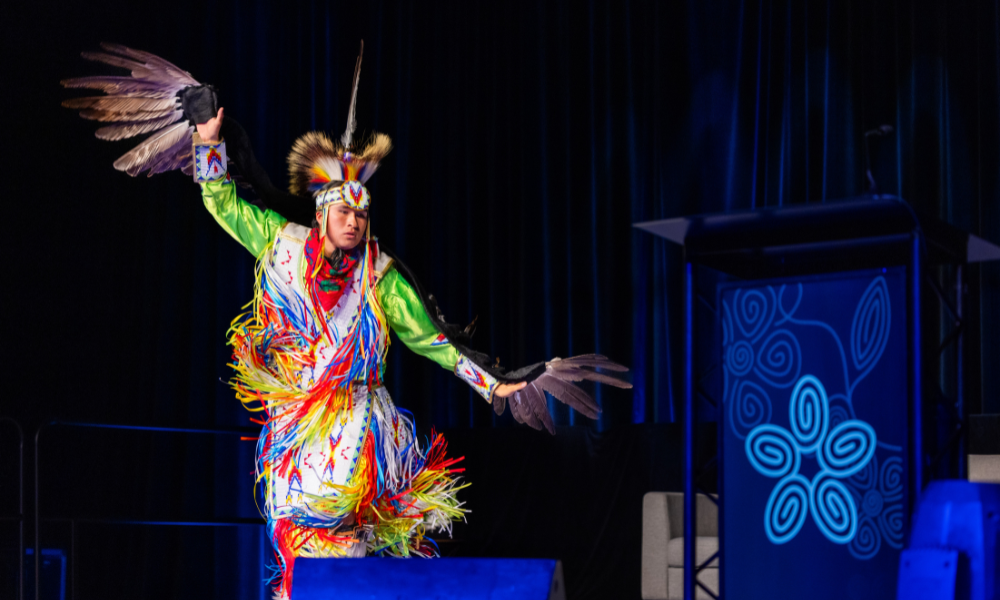
NAPCON26: Highlights From Our 2026 Annual Conference
Over three days in Riverside, California, Native leaders, funders, organizers, and community members gathered for the Native Americans in Philanthropy 2026 Annual Conference.
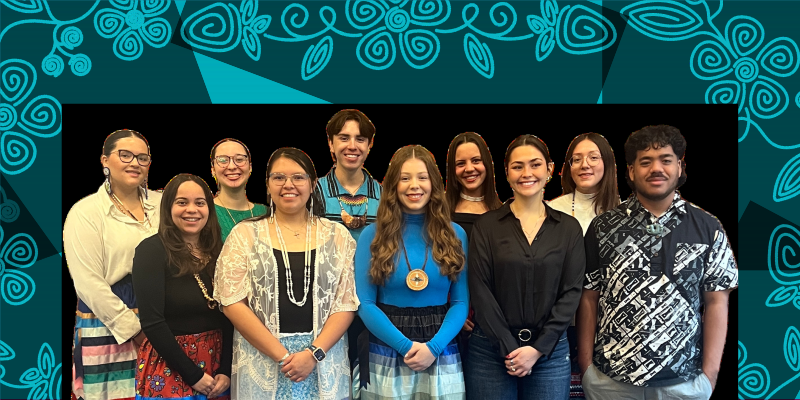
Native Youth Grantmakers in Seattle
The 2026 Native Youth Grantmakers (NYG) convened together for the first time on the homelands of our Coast Salish relatives. Beyond gaining new relatives and networking at every turn, the retreat’s agenda included courses in personal development, cultural grounding, and exploring each participant’s role as members of their respective communities and their new place within the philanthropic sector.
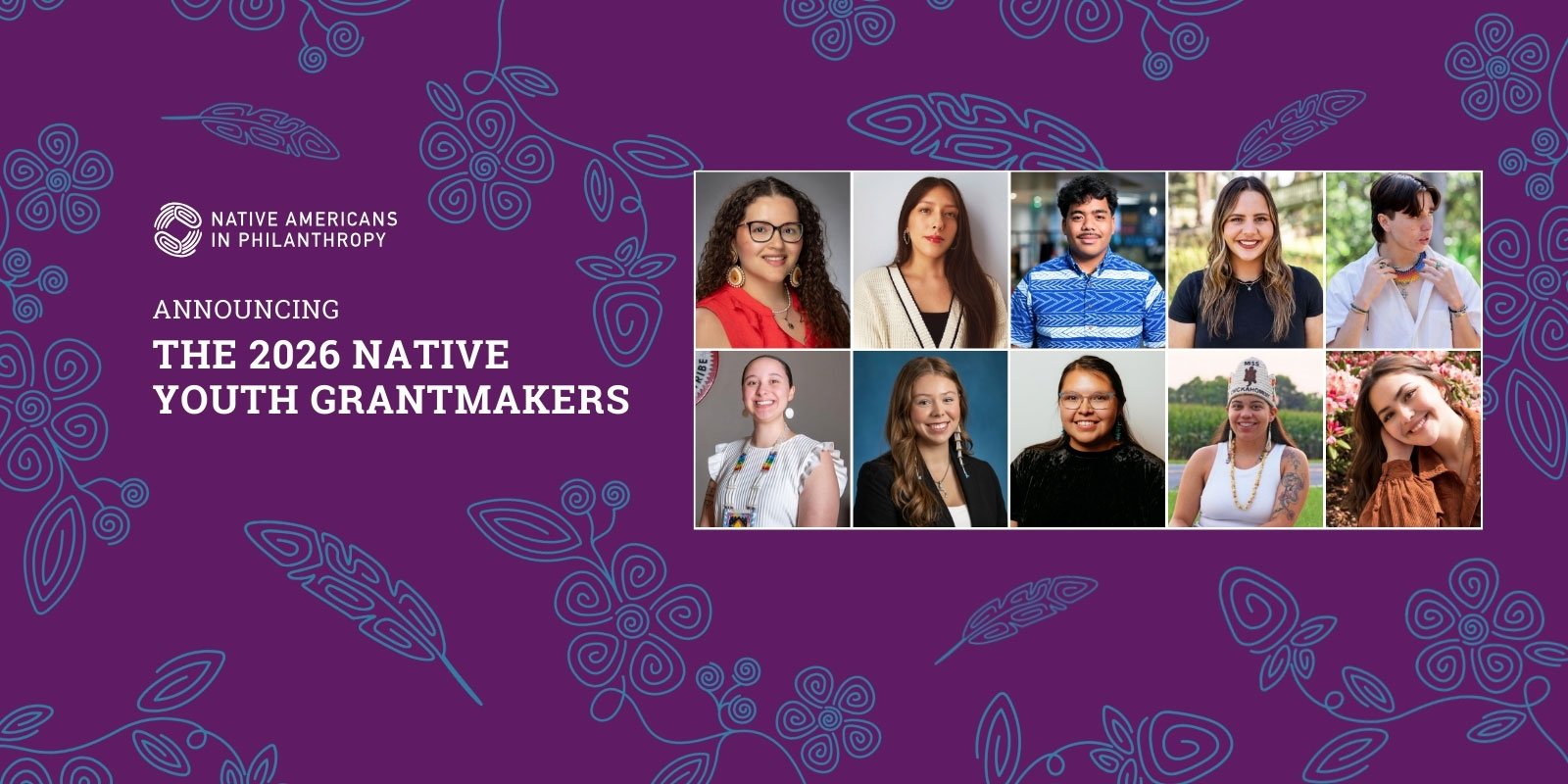
Native Americans in Philanthropy Announces Third Cohort of Native Youth Grantmakers
Native Americans in Philanthropy (NAP) is thrilled to announce the 2025-2026 Native Youth Grantmakers. These extraordinary and highly accomplished young individuals are the embodiment of passion, excellence, and a deep commitment to making a positive difference in their communities. As we welcome this new cohort, we celebrate their achievements, their futures, and their dedication to advancing Native-led philanthropy.
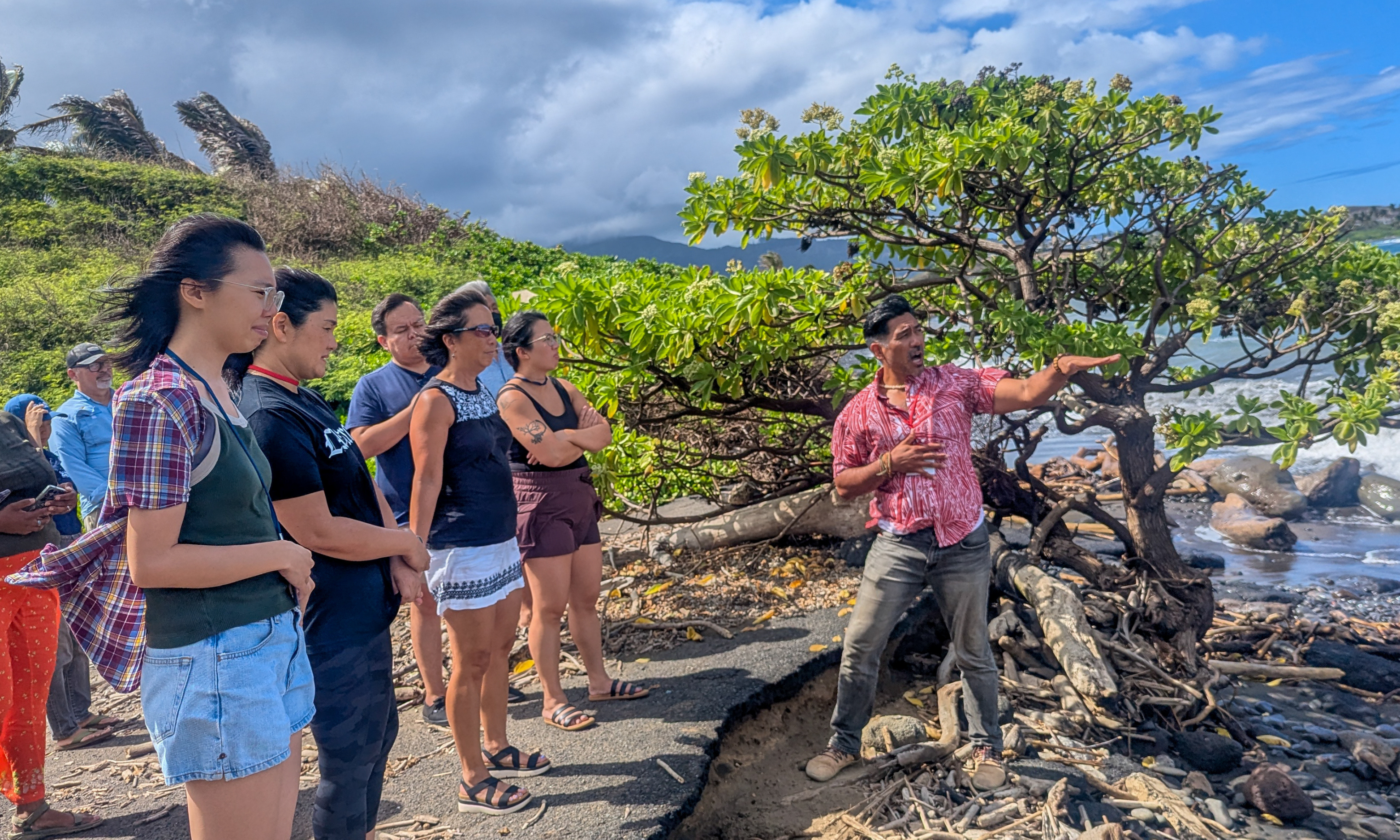
Standing Hand-in-Hand: Reflections on Reclamation, Partnership, and Possibility in Hawaiʻi
Native Hawaiian Philanthropy, Native Americans in Philanthropy, and Asian Americans/Pacific Islanders in Philanthropy came together for the Power in Solidarity: Hawaiʻi Funder Tour