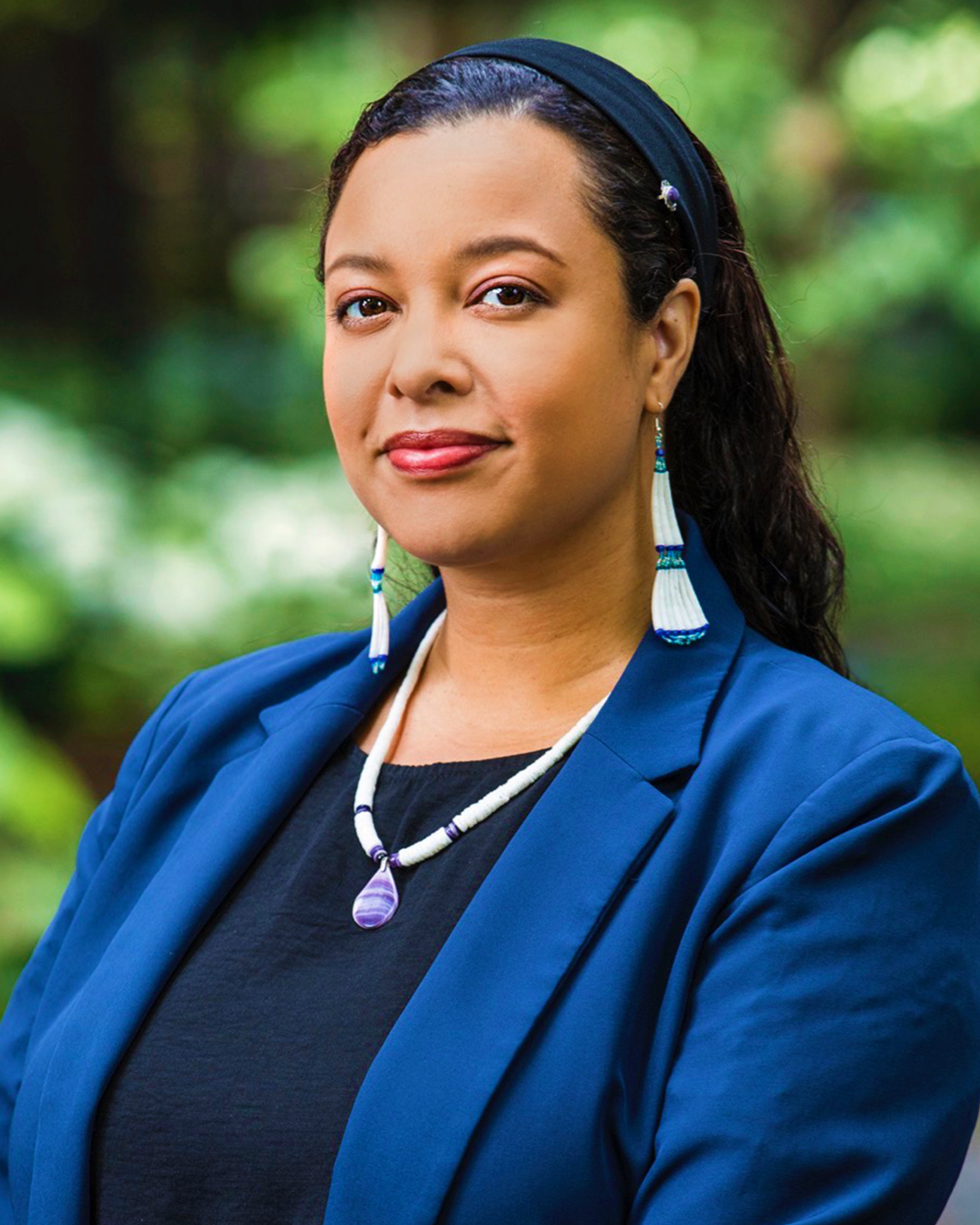
Kelly Dennis, Esq.
(Shinnecock and Hassanamisco Nipmuc)
Partnership Strategist
Kelly joins Native Americans in Philanthropy as Partnership Strategist through an Intergovernmental Personnel Act Agreement with the U.S. Department of the Interior (DOI) to support private-public partnerships with Tribes, Tribal Organizations, and other NGOs. Kelly works to support public-private partnerships with local and international foundations and NGOs, as well as businesses and other private sector entities in the realm of conservation and co-stewardship, economic development, climate resiliency and adaptation as well as education initiatives including those strengthening Native languages and cultural revitalization.
Kelly is an attorney who previously served a full two-year term as Councilwoman Secretary for the Shinnecock Indian Nation Council of Trustees elected governing body. Kelly also served on the first-ever DOI Secretary’s Tribal Advisory Committee (STAC) and was appointed to be the Eastern Region Primary Representative during her term as an elected Tribal Leader. Kelly received her Juris Doctor from the University of New Mexico (UNM) School of Law with an American Indian Law Certificate after participating in the Southwest Indian Law Clinic (SILC), Tribal Law Journal, and the Native American Law Students Association (NALSA). A cum laude graduate of Middlebury College, Kelly received her Bachelor of Arts degree with a major in Political Science and a minor in Japanese language studies. Kelly is admitted to the practice of law in New York State.
Stories & Updates
Changing the conversation.Get the latest NAP news.
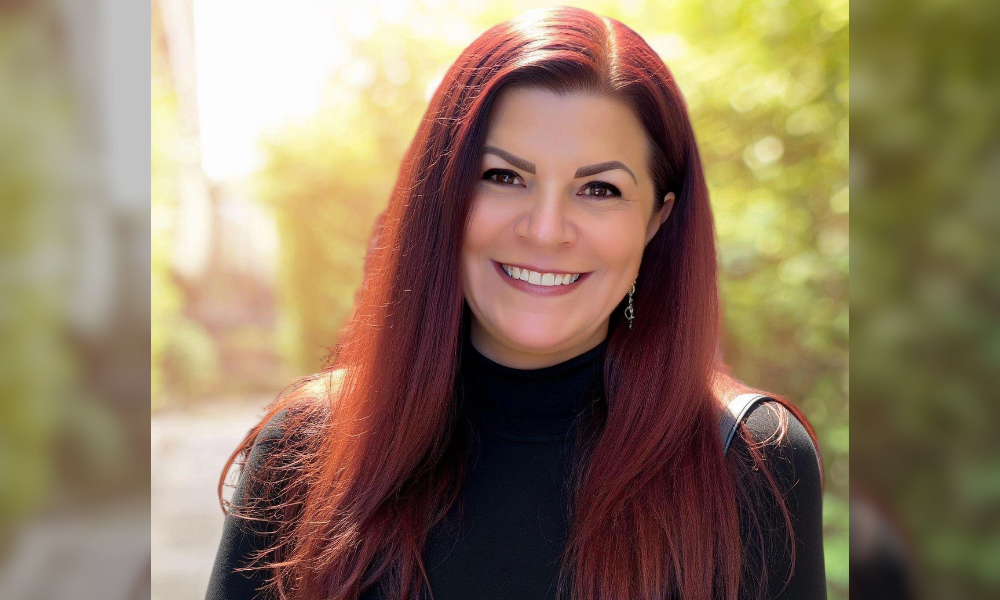
NAP Welcomes Sarah EchoHawk as Managing Director
We are excited to welcome Sarah EchoHawk (Pawnee) as the Managing Director of Native Americans in Philanthropy.
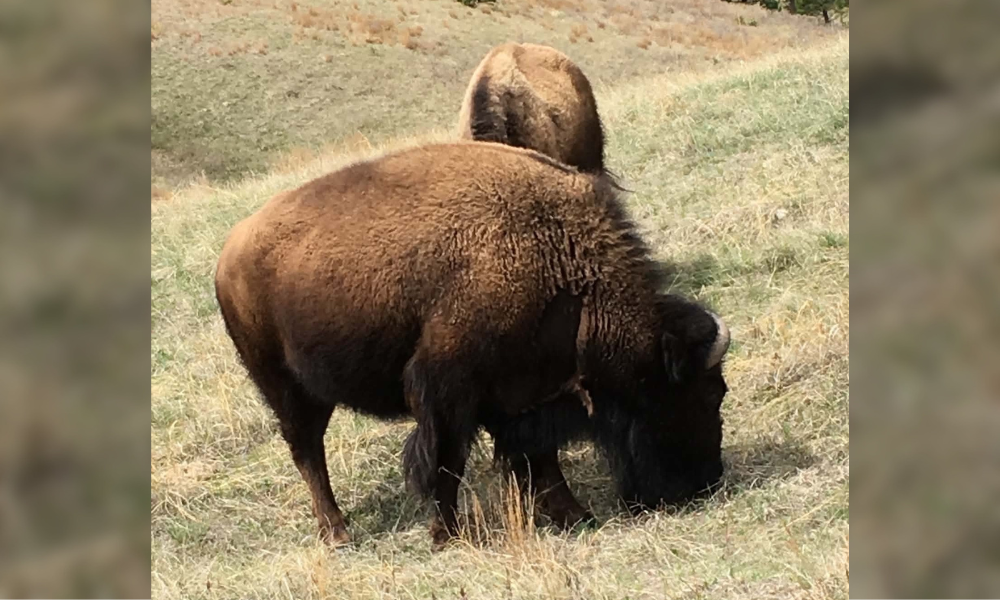
Restoring Buffalo, Restoring a Way of Life: The Knife Chief Buffalo Nation Society
The Lakota philosophy continues through the work of the Knife Chief Buffalo Nation Society, a community-led effort restoring buffalo, culture, spirituality, and connections between generations.
.jpg)
Indigenous Tomorrows Fund Expands in Year Two With $1.65 Million Investment in Youth-Led Grantmaking
Native Americans in Philanthropy, Newman’s Own Foundation, and Novo Nordisk are thrilled to announce the recipients of the 2025 Indigenous Tomorrows Fund (ITF) grants.
.jpg)
The Indigenous Tomorrows Fund: 2026 Grant Applications Now Closed!
Native Americans in Philanthropy, Newman’s Own Foundation, and Novo Nordisk are thrilled to announce the recipients of the 2025 Indigenous Tomorrows Fund (ITF) grants.
.jpg)
Native Youth Grantmakers at NAPCON26
The 2026 Native Youth Grantmakers (NYG) convened together for the first time on the homelands of our Coast Salish relatives. Beyond gaining new relatives and networking at every turn, the retreat’s agenda included courses in personal development, cultural grounding, and exploring each participant’s role as members of their respective communities and their new place within the philanthropic sector.
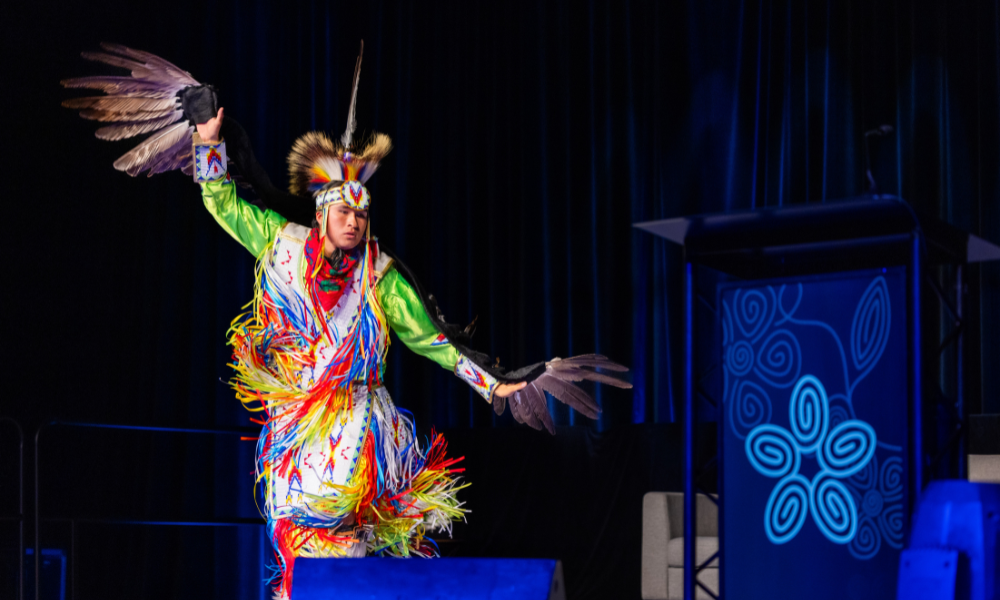
NAPCON26: Highlights From Our 2026 Annual Conference
Over three days in Riverside, California, Native leaders, funders, organizers, and community members gathered for the Native Americans in Philanthropy 2026 Annual Conference.
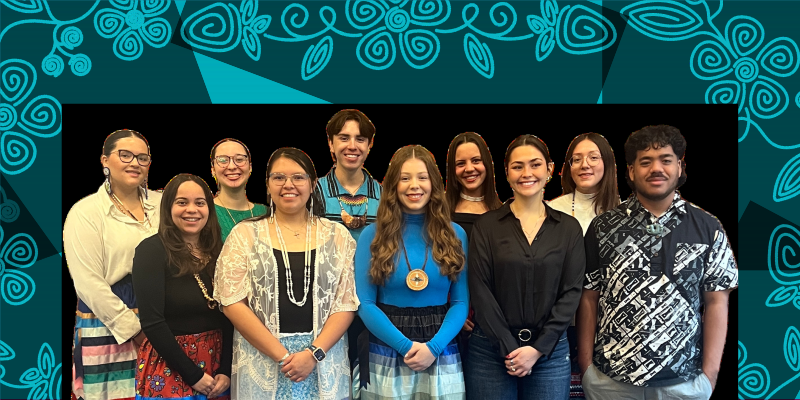
Native Youth Grantmakers in Seattle
The 2026 Native Youth Grantmakers (NYG) convened together for the first time on the homelands of our Coast Salish relatives. Beyond gaining new relatives and networking at every turn, the retreat’s agenda included courses in personal development, cultural grounding, and exploring each participant’s role as members of their respective communities and their new place within the philanthropic sector.
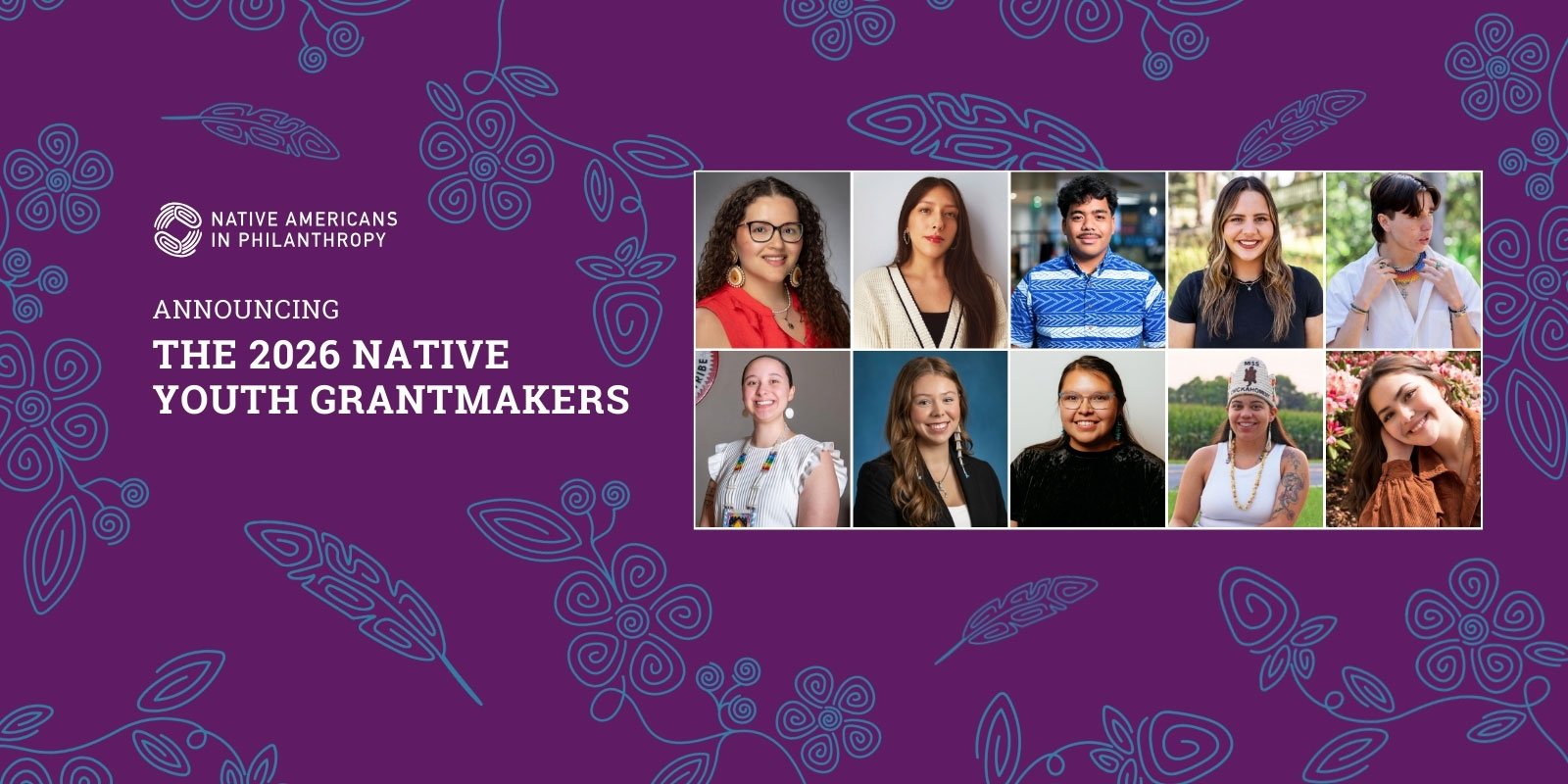
Native Americans in Philanthropy Announces Third Cohort of Native Youth Grantmakers
Native Americans in Philanthropy (NAP) is thrilled to announce the 2025-2026 Native Youth Grantmakers. These extraordinary and highly accomplished young individuals are the embodiment of passion, excellence, and a deep commitment to making a positive difference in their communities. As we welcome this new cohort, we celebrate their achievements, their futures, and their dedication to advancing Native-led philanthropy.
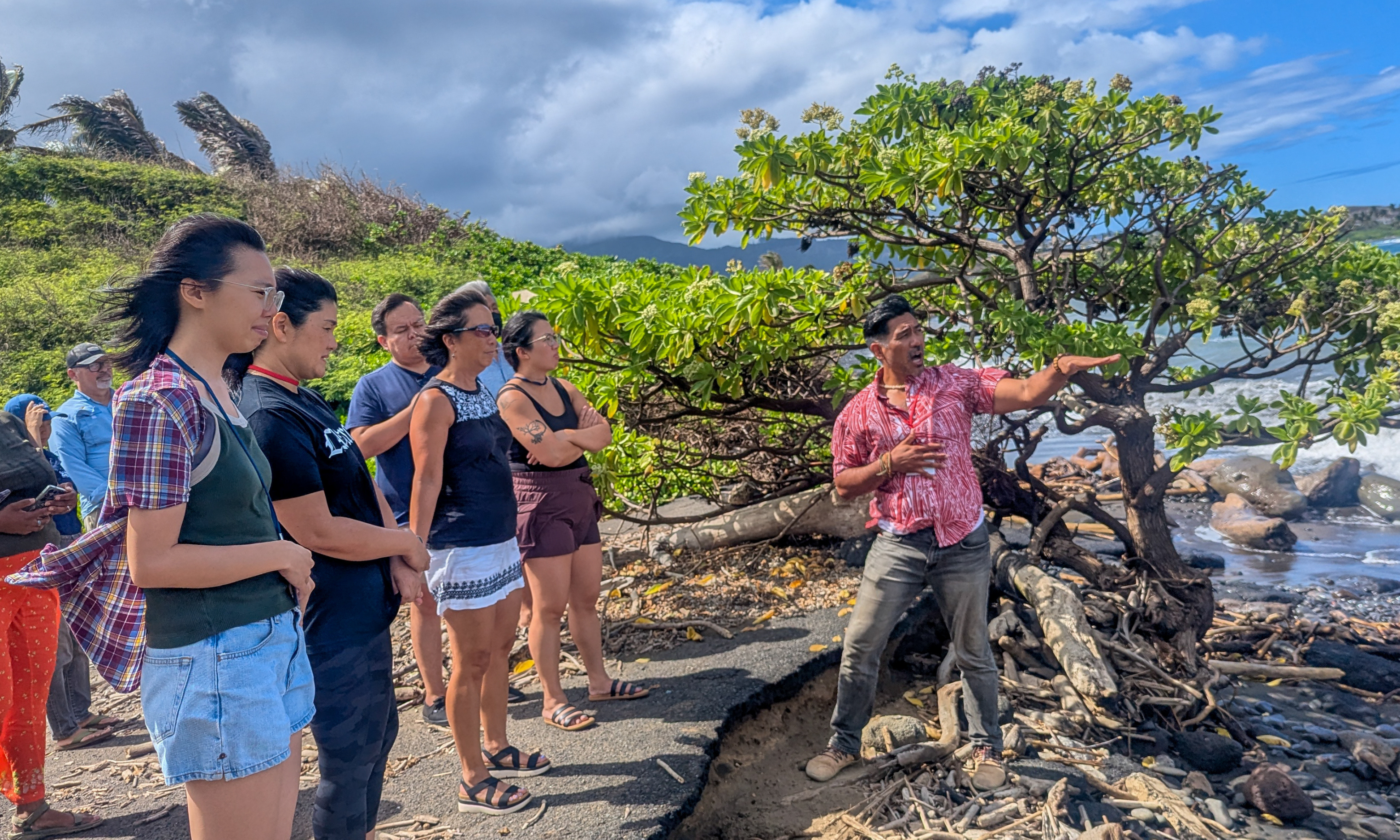
Standing Hand-in-Hand: Reflections on Reclamation, Partnership, and Possibility in Hawaiʻi
Native Hawaiian Philanthropy, Native Americans in Philanthropy, and Asian Americans/Pacific Islanders in Philanthropy came together for the Power in Solidarity: Hawaiʻi Funder Tour