Return to All Stories & Updates

Native Americans in Philanthropy Announces Third Cohort of Native Youth Grantmakers

January 14, 2026 | 9 min read

Native Americans in Philanthropy Announces Third Cohort of Native Youth Grantmakers

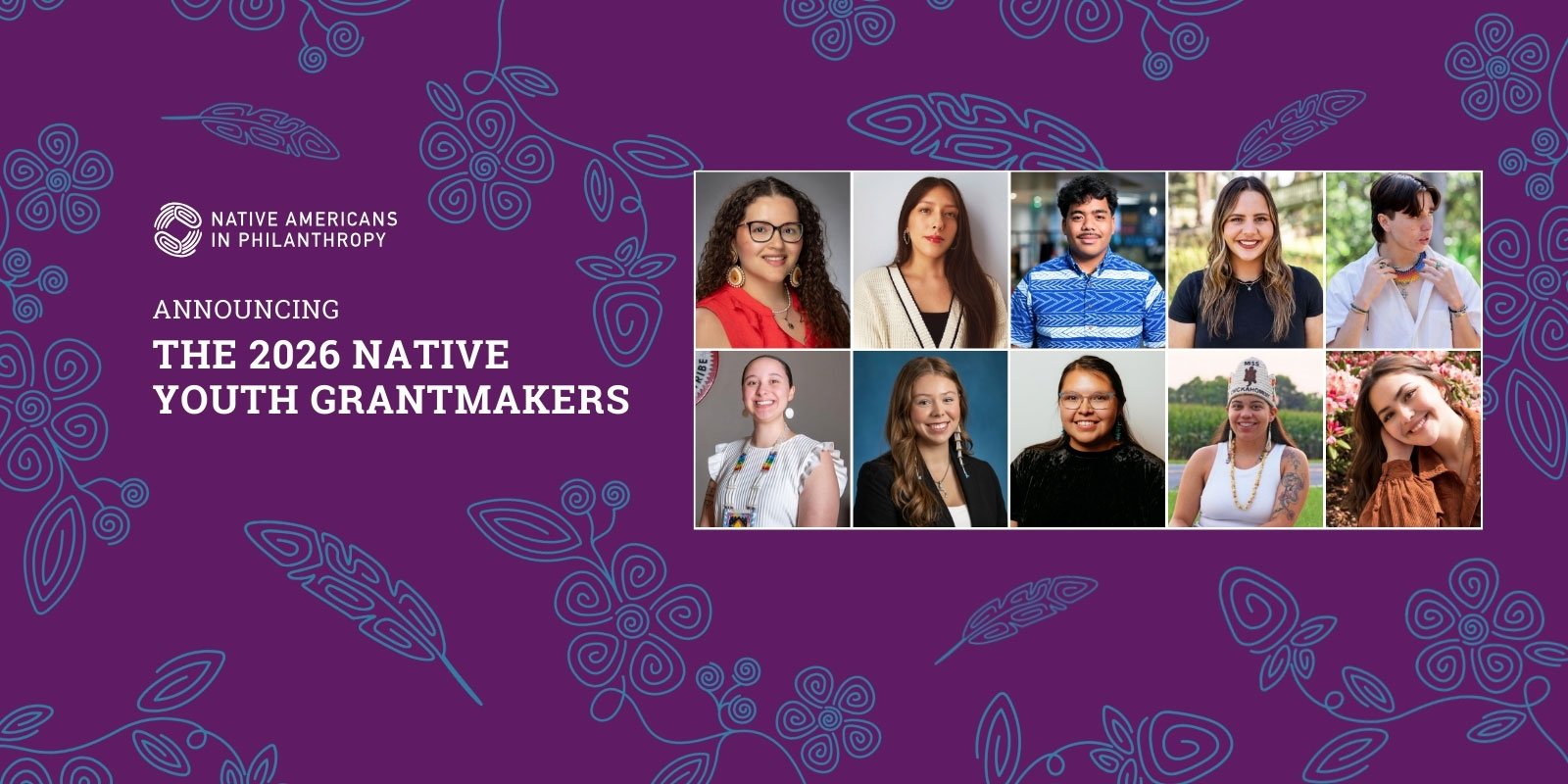
Native Americans in Philanthropy (NAP) is honored to welcome the third cohort of Native Youth Grantmakers—ten exceptional young leaders from across Turtle Island who carry with them the wisdom of their communities, the determination of emerging changemakers, and the generosity that has long defined Indigenous approaches to giving. 

This new group of youth leaders, ages 18–24, will begin their year-long program that was intentionally designed to nurture Indigenous leadership and ensure young people have a meaningful role in shaping the philanthropic landscape. Each participant brings a deep connection to their home community—whether reservation, rural, or urban—and a commitment to uplifting Indigenous voices and envisioning a future rooted in cultural strength. 

About the Native Youth Grantmakers Program 

NAP’s Native Youth Grantmakers initiative was created to shift power by bringing youth directly into decision-making roles. Through a blend of in-person gatherings, virtual workshops, mentorship opportunities, and hands-on grantmaking experience, the program introduces participants to the philanthropic sector while grounding their learning in Indigenous values. 

Guided by the principles of Respect, Reciprocity, Responsibility, Relationships, and Redistribution, the cohort will explore the many ways philanthropy can serve as a tool for community care and long-term wellbeing. They will meet with Native-led non-profits and partners, connect with Indigenous leaders across many sectors, and learn strategies that strengthen their advocacy, leadership, and community-driven vision. 

A core element of the program includes direct involvement in participatory grantmaking. Supported by NAP staff and partners, the youth will engage with real-world grant review processes through the Indigenous Tomorrows Fund, helping shape investments that support critical initiatives in Native communities. This experience offers youth an opportunity that goes beyond learning about philanthropy—they are practicing, contributing, and transforming it. 

The Next Generation of Indigenous Philanthropic Leaders

The ten participants selected for this third cohort represent a growing movement of young leaders who are redefining what philanthropy can look like when guided by cultural values, community accountability, and collective care. Their voices, experiences, and insight strengthen NAP’s mission to expand Indigenous leadership in all areas of resource sharing. 

NAP celebrates these young people and looks forward to the year ahead—a year of connection, learning, personal growth, and meaningful contribution. As they begin their journey, we honor the communities that shaped them and the future they are helping to build. 

More stories, reflections, and highlights from the cohort will be shared throughout the year as these young leaders step into their roles as Native Youth Grantmakers and carry forward the spirit of Indigenous philanthropy across Turtle Island. 

Congratulations to the 2026 Native Youth Grantmakers!
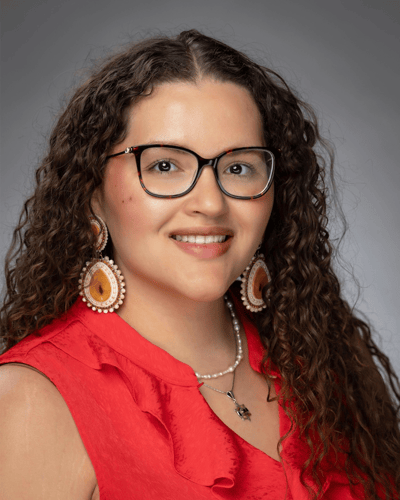
Jada Allen

Tribal Affiliation: Lumbee Tribe of North Carolina 
Hometown: Lumberton, NC 
Pronouns: She/Her 

Jada Allen is a citizen of the Lumbee Tribe of North Carolina and a recent graduate of Duke University, where she earned her BA in Public Policy with a minor in Global Health and a certificate in Health Policy. As an undergraduate, her work centered on addressing and eliminating health disparities, including through her research as a Margolis Scholar in Health Policy & Management.
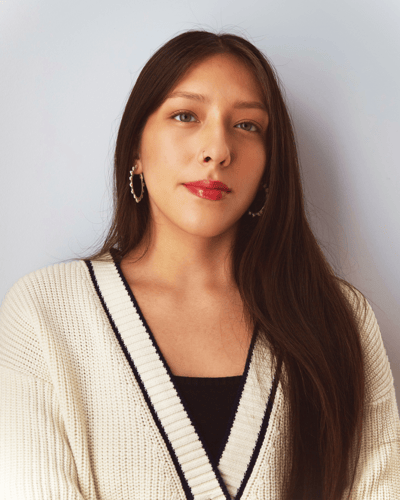
She also served as an Advocate with the Community Empowerment Fund and completed a Udall Internship in the U.S. Department of the Interior in the Office of the Assistant Secretary for Indian Affairs.

Jada is an incoming Clinical Research Fellow at the Duke Cancer Institute, where she will study modifiable risk factors for stomach cancer and support community-engaged outreach initiatives with Native communities across North Carolina. An interdisciplinary thinker committed to equity and self-determination, she aims to integrate epidemiology research, health policy, and tribal sovereignty into a career as a legal advocate.


Madison Brown

Tribal Affiliation: Seneca Nation 
Hometown: Salamanca, NY 
Pronouns: She/Her

Madison Brown, A:ya’gah’ganö:s’ (she has beautiful eyes), Onöndowa’ga:’, is an enrolled member of the Seneca Nation, from the Allegany Territory. Madison is deeply rooted in leadership and advocacy, particularly within Indigenous youth organizations and community development initiatives. 
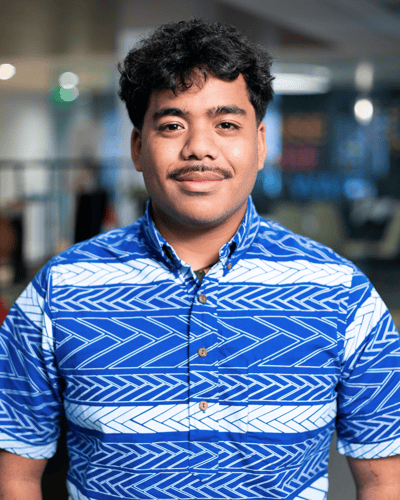
She served as Secretary (2022-2024) and subsequently, before her departure, served briefly as Co-President of the National Congress of American Indian Youth Commission, fostering her commitment to youth empowerment and tribal governance.  

Currently, Madison is pursuing a degree in Sociology at her local community college, which has expanded her understanding of societal structures and community dynamics. In 2024, she was appointed to the Seneca Nation 1365 Resettlement Committee, a critical role tasked with developing a comprehensive plan for the Seneca Nation's resettlement within the Kinzua Dam Area, lands from which they were forcibly removed in 1965. This appointment highlights her dedication to historical justice and tribal sovereignty.  

Beyond her more formal roles, Madison actively engages in community service and environmental stewardship, advocating for the land and more recently the Allegany River. Her recent internship with Congressman Langworthy (NY-23rd) provided valuable experience in intergovernmental coordination, fostering a keen interest in the intricate relationships between tribal nations and governmental entities, grounded in principles of sovereignty over their people and land.  

Outside of her professional and advocacy endeavors, Madison is an avid outdoorswoman, finding inspiration and connection to the "teachings in the soil" through activities such as fishing, hunting, and gathering. 


Pahonu Coleman

Tribal Affiliation: Native Hawaiian 
Hometown: Waimānalo (O’ahu), HI 
Pronouns: He/Him 

Pahonu Coleman is a young Native-Hawaiian leader, artist, and advocate from Waimānalo, Oʻahu. Growing up deeply connected to his ʻāina (land), ʻohana (family), and community, he channels that sense of belonging into his work — especially in cultural preservation, community organizing, climate justice and youth empowerment. 
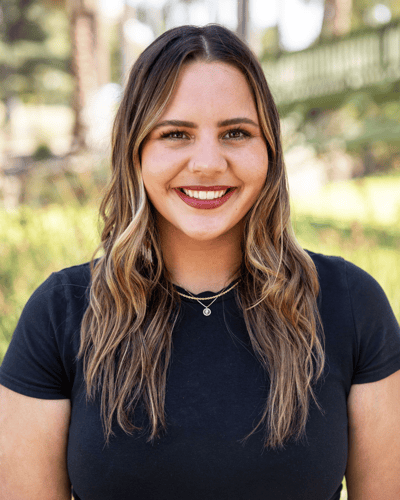
As a fluent Hawaiian language practitioner and educator, Pahonu believes that indigenous languages play a key role in preserving cultural and ecological knowledge and can be informants to creating a better future. He has also served as vice-chair of the Honolulu Youth Commission for the City and County of Honolulu and is involved in several community-driven projects and is proud to serve on multiple boards. Pahonu is determined to be a part of the shift and prioritization of indigenous peoples in philanthropy.


Sequoia Coleman

Tribal Affiliation: Seminole Nation of Oklahoma and Mvskoke 
Hometown: Sacramento, CA
Pronouns: She/Her 

Sequoia Coleman (Seminole Nation of Oklahoma & Mvskoke) is a Northern California Community Organizer born and raised in Sacramento, dedicated to creating spaces where Native youth feel supported, connected, and prepared to lead. 
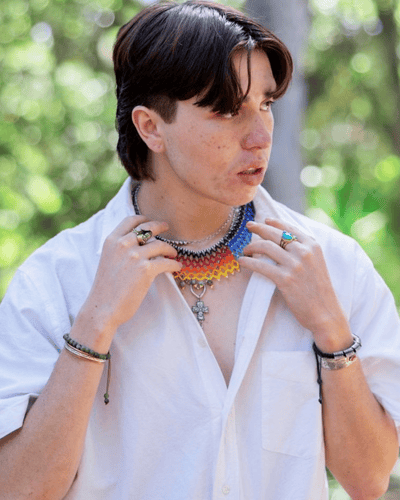
In her role, she coordinates youth-centered programming across the state, focusing on civic engagement, leadership development, and culturally grounded approaches to community power-building. Her work centers on training Native youth to become community organizers who can return home to support their communities’ strengths, priorities, and visions for meaningful change. She is known for curating intergenerational spaces that uplift the Native youth voice, by setting the tone and building connection, young people feel grounded and ready to step into leadership.  

She holds a Bachelor of Science from the University of Hawai‘i, where she originally planned for a career in athletic training before discovering her passion for community work and youth leadership. That shift continues to shape her approach grounded in care, relationship-building, and a belief that young people thrive when they are supported holistically.  

The impact that supportive community spaces had on her own life drives her passion to ensure that Native youth have the tools and encouragement needed to contribute to their communities in powerful and meaningful ways.


Anagali Duncan

Tribal Affiliation: Cherokee Nation 
Hometown: Stilwell, OK 
Pronouns: He/Him

Anagali Duncan is a first-generation Native scholar from Stilwell, Oklahoma, on the Cherokee Reservation. Raised in a close-knit community with deep cultural roots, he has long been committed to serving Indigenous communities and amplifying Native voices. His academic work explores Tribal sovereignty, Indigenous law, and public policy, reflecting his dedication to combining scholarship with community advocacy.
At Stanford University, where he studies Comparative Studies in Race and Ethnicity with a focus on Politics, Policy, and Equity, and is graduating with Honors in Democracy, Development, and the Rule of Law, Anagali has distinguished himself through rigorous research and leadership. He is a Mellon Mays Undergraduate Fellow, Udall Fellow, Yale Author and Liman Public Interest Law Fellow, Dreamstarter Fellow, and a participant in programs such as the Harvard Kennedy School Public Policy Leadership Conference and Stanford in Government. He has collaborated on research programs at Harvard Forest, Yale, Brown University, and Stanford’s Freeman Spogli Institute, focusing on tribal governance, and has presented his findings at conferences including the Ecological Society of America and the National Office of Juvenile Justice and Delinquency Prevention Convention. 

Beyond academia, Anagali has engaged in public policy and youth leadership initiatives, speaking at forums including the United Nations and the White House. He has organized environmental justice campaigns and helped pass three policy proposals with the American Bar Association. His honors thesis examines the political-economic and legal relationship between the Tribes in Oklahoma bridging history, policy, and community impact. 

Anagali’s leadership is marked by humility, cultural integrity, and a commitment to actionable change. He aims to pursue advanced study in law, public policy, and public affairs, combining research expertise with advocacy to support Indigenous governance, legal reform, and public interest work. 


Sara Jefferson

Tribal Affiliation: Chickahominy Indian Tribe  
Hometown: Charles City, VA 
Pronouns: She/Her 

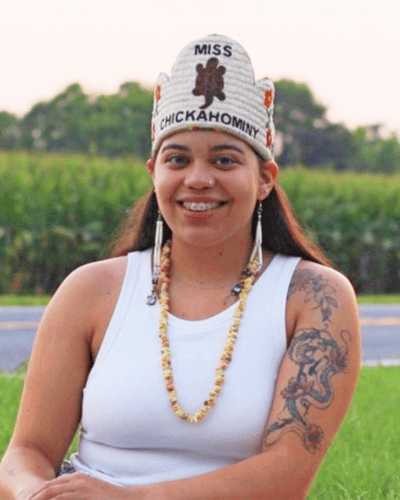
Sara Jefferson is an enrolled citizen of the Chickahominy Indian Tribe of Virginia, where she held the title of Miss Chickahominy from 2022 to 2024. She is a graduate of George Mason University, earning her bachelor's degree in Conflict Analysis and Resolution.
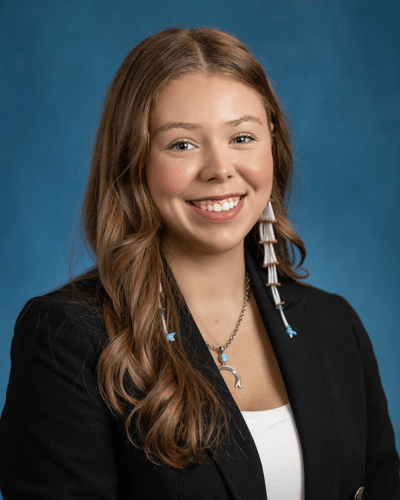
Throughout her time as a student, she was able to restart the Native American and Indigenous Alliance student group post-Covid and has helped plan several student-led pow wows.

As a professional, she spearheaded the writing of tribal grievance policy and assisted in the writing of several grants. She is passionate about teaching Tribal youth about their heritage in order to inspire them to be proud of their roots and embrace where they come from. She strives to continue to uplift the voices of Native Americans in Virginia and tell their stories the way they deserve to be told. 


Katie Lynch

Tribal Affiliation: Citizen Potawatomi Nation
Hometown: Ann Arbor, MI
Pronouns: She/Her

Katie Lynch (Citizen Potawatomi Nation) is a Potawatomi researcher, engineer, and artist, passionate about building Indigenous-led systems of care. She is currently a Ph.D. Student in Health Infrastructures & Learning Systems at the University of Michigan Medical School and she graduated with a degree in Biomedical Engineering from Rutgers University in May 2024.
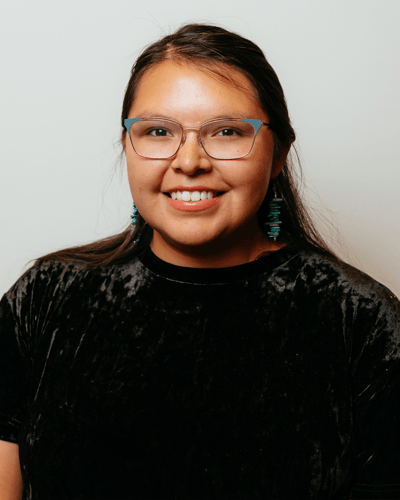
With experience across federal, non-profit, and corporate policy spaces, Katie brings a multidisciplinary and relational lens to her work. Katie is a researcher studying Indigenous conceptualizations of learning health systems and food sovereignty, with particular interests in place-based healing and collective resurgence as forms of radical hope and vibrant Anishinaabe futurism. Her research centers reciprocity and aims to move science and scholarship towards collective liberation.

Outside of academics, she is a 2025 Champion for Change with the Center for Native American Youth, where she advocates for the inclusion of Native youth voices in governance and decision-making. She believes that Native youth must be in the rooms where decisions are being made, to speak truth to power, and to demand a better world. 

In the future, Katie hopes to pursue a career in academia focused on Indigenous food system restoration as a public health mechanism. She finds strength in community, collectivity, and the power of Indigenous people to exist in spaces designed to resist them. Her long-term professional goal, in simple terms, is to give back to her Indigenous community and make a difference in the lives of Indigenous people around the country and world. 


Hannah Naljahih

Tribal Affiliation: Diné and Kiowa 
Hometown: Gallup, NM 
Pronouns: She/Her 

Hannah Naljahih is a Diné and Kiowa woman from Gallup, New Mexico. She is Tł’ízí’ Łání (Manygoats Clan) and born for the Tó’dích’íí’nii (Bitter Water Clan). Her upbringing on the Navajo Nation, grounded in community values and cultural teachings, continues to guide her work and leadership.
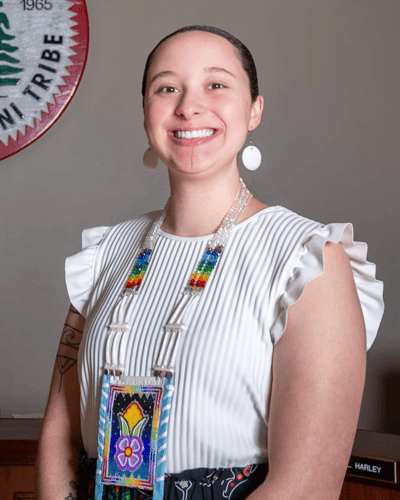
Hannah currently works in Indigenous governance and research, focusing on strengthening tribal sovereignty, community-driven decision-making, and policies that protect land, water, and cultural rights. She holds a master’s degree in Indigenous Governance from the University of Arizona and bachelor’s degrees in criminology and psychology from the University of New Mexico. 

Her current leadership includes serving as a Notah Begay III Foundation Youth Council member in leading change in youth development projects to give back to Native communities. She has also served as a mentor, ambassador, research fellow, and advocate for Indigenous students and families navigating educational systems and resources. Hannah’s work is shaped by lived experience and resilience, and she is committed to serving Native people. She is passionate about building pathways and ensuring that Native people are the ones shaping our laws and governance in ways that honor and reflect our cultural values.


Evynn Richardson

Tribal Affiliation: Haliwa-Saponi 
Hometown: Hollister, NC 
Pronouns: She/Her 

Ksé:hahiyé Evynn Richardson is a proud citizen of the Haliwa-Saponi Indian Tribe of Hollister, NC. Being extremely dedicated to uplifting Native youth based services and initiatives, she served on the National UNITY Council Executive Committee as both the Southeastern Representative and the Vice-President for 3 consecutive years and the inaugural cohort for CNAY’s Remembering Our Sisters fellowship.

Through these communities Evynn has been able to uplift culturally relevant wellness practices, encourage youth to take holistic based approaches to problem solving within their communities, and advocate for healing and justice when it comes to the MMIP epidemic.  

When she is not plugged into these spaces, Evynn is using her platform, The Medicine Kid, to provide artwork for individuals, tribes, and organizations across Indian Country.

By utilizing her artistic gifts she has been able to build a MMIP art advocacy toolkit, donate funds towards Native youth scholarships, help generate revenue for her tribe, and is currently working on a free archive of MMIP artwork for public use. It is her hope that the work she does will inspire others to utilize their gifts to give back to their communities in whatever ways possible.  

“If you want to know what your purpose is, all you have to do is ask yourself how you will feed the people.”


Shyan Zaiss

Tribal Affiliation: Suquamish 
Hometown: Suquamish, WA 
Pronouns: She/Her

Shyan is a full-time, first-generation college student wrapping up her fourth year at Washington State University (Go Cougs!). She grew up in Suquamish, Washington, and she is an enrolled member of the Suquamish Tribe.  Academically, Shyan is working hard to complete her Bachelor of Arts in Marketing with a minor in Hospitality Business Management. 
After graduation, her goal is to attend flight school as an aspiring commercial airline pilot! Giving back to her community and stepping into leadership roles has always been important to Shyan.

As the oldest of three siblings and growing up in a small community, she has naturally developed strong leadership and mentoring skills. Shyan put those skills to work serving on the Suquamish Youth Council from August 2018 to August 2022, where she was a Female Representative and eventually stepped up as the Vice Chairwoman. Shyan is eager to learn and contribute alongside the other members of the NYG cohort!  


For more information about the Native Youth Grantmakers program, please visit nativephilanthropy.org/NYG

Comments